The World Bank Group, JICA, and ADB Advance Evidence-Based Operations through Tokyo LEADS
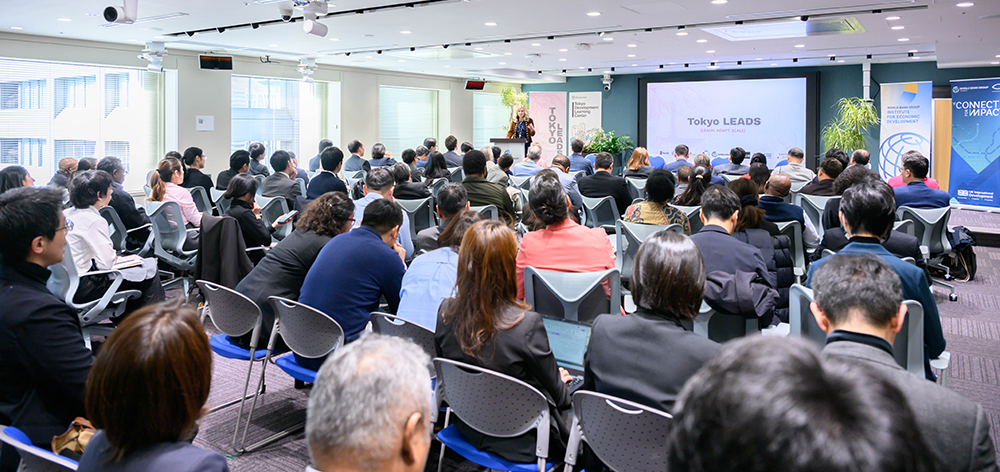
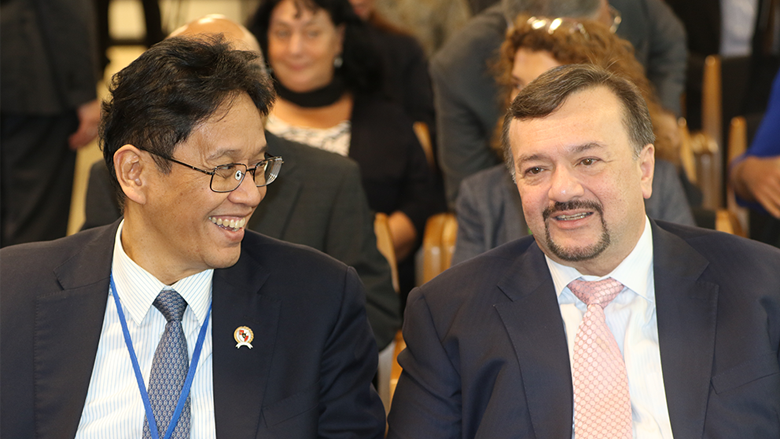
The World Bank Group, in collaboration with the Japan International Cooperation Agency (JICA) and the Asian Development Bank (ADB), held Tokyo LEADS (Learn. Adapt. Scale.) from January 26-29, 2026. By convening government officials, researchers, and operational teams to work together on the design of operational projects, the organizations are advancing the use of evidence and adaptive learning in development.

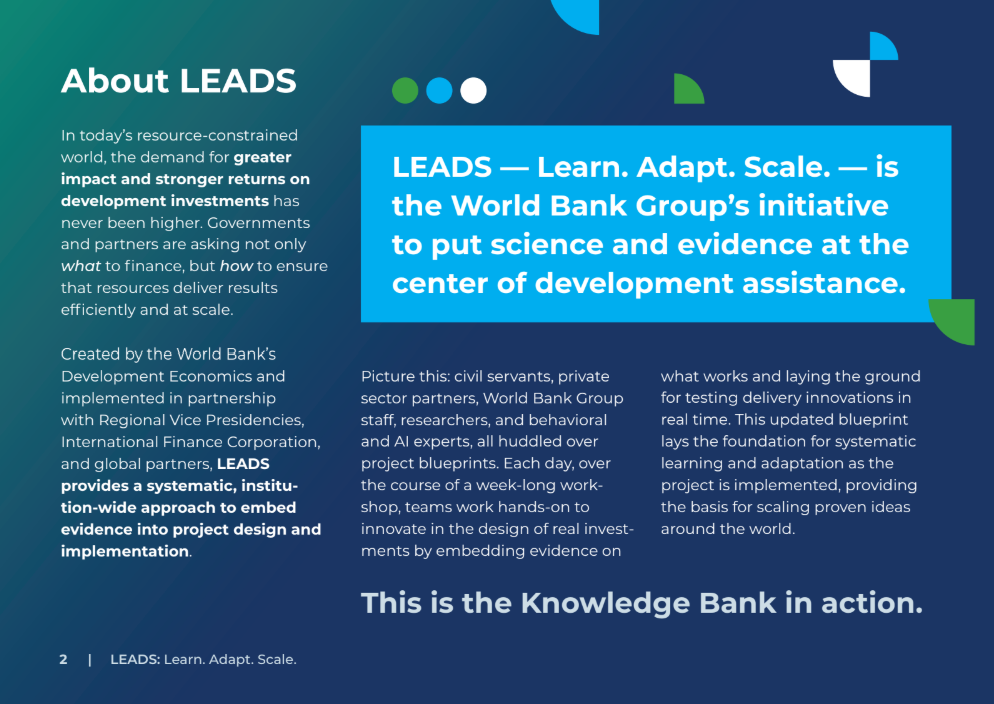
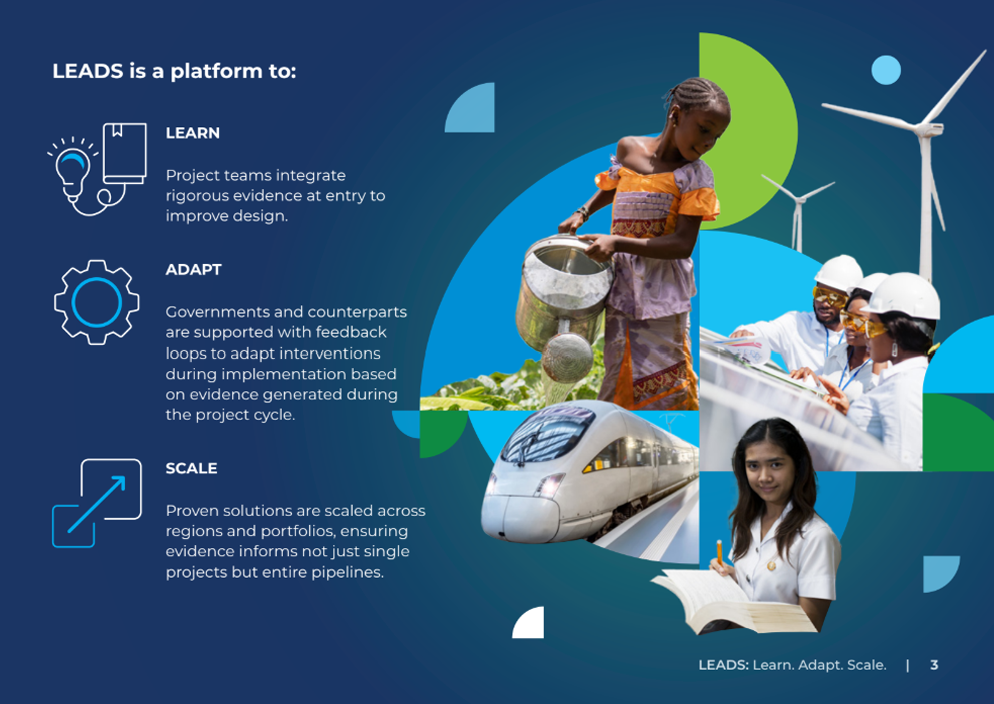
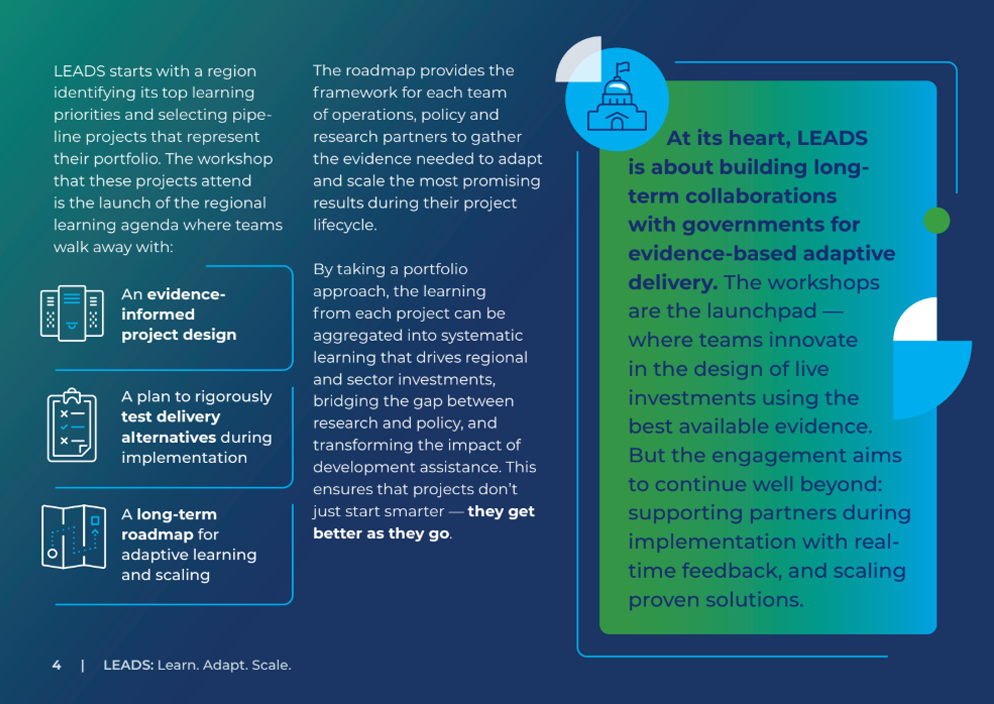
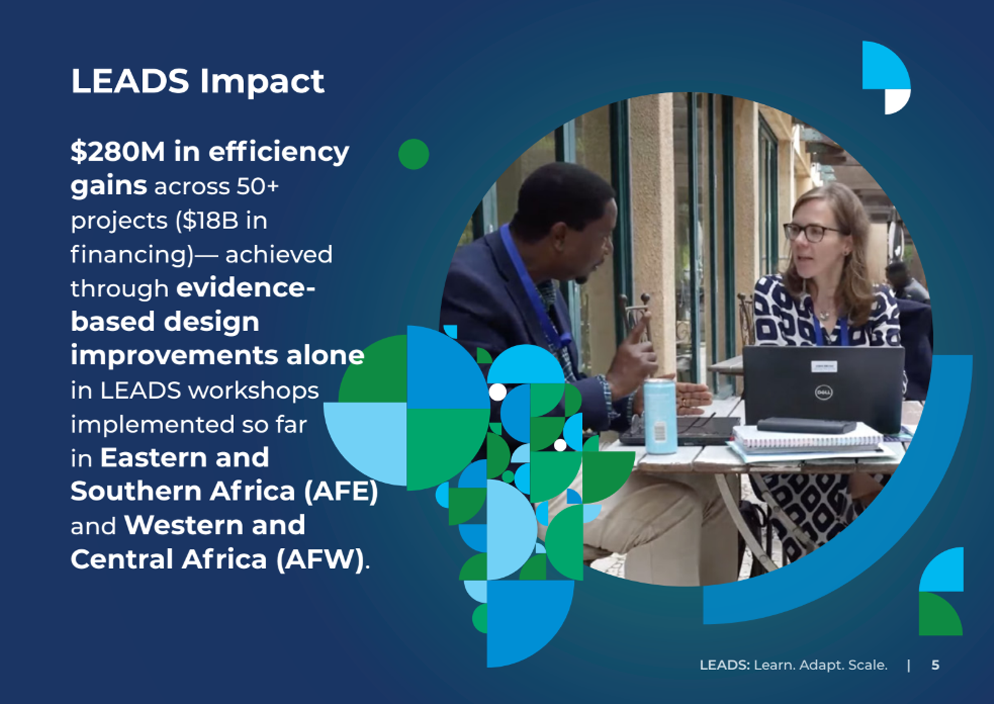
Hosted at the World Bank Tokyo office, Tokyo LEADS is part of the World Bank Group’s LEADS initiative, led by the Development Economics Vice Presidency (DEC) and delivered in close collaboration with global institutions. At its core, LEADS is about closing the gap between intention and impact. The LEADS model supports government teams with the tools, methods, and mindsets to learn in real time, adapt during implementation, and scale effective solutions.

As development challenges grow more complex and dynamic, projects increasingly need mechanisms to learn and adjust during delivery. LEADS responds to this need by embedding evidence directly into operations, enabling teams to test alternatives, course-correct based on data, and make informed decisions throughout the project lifecycle rather than only at the design stage.
In the infrastructure sector, Indonesian officials worked with transport experts to strengthen the impact and evaluation of mass transit projects in the cities of Bandung and Medan.
In the health sector, Bhutanese officials worked to design a new scheme to strengthen the management of chronically ill patients in the country.
In the governance sector, officials from Uzbekistan worked with tax experts to assess the impact of a service sector tax reform and the losses that had arisen from its implementation.

Beyond strengthening the design of operational projects, Tokyo LEADS showcased cutting-edge research on strengthening the impact of infrastructure projects. Stéphane Straub, Chief Economist for Infrastructure at the World Bank, presented new global data on infrastructure stocks and costs across the world. His analysis showed, for example, that countries reaching high-income status have accumulated transport capital at a faster pace than that of economic growth, shifting the nature of their economies and the composition of their infrastructure stocks.
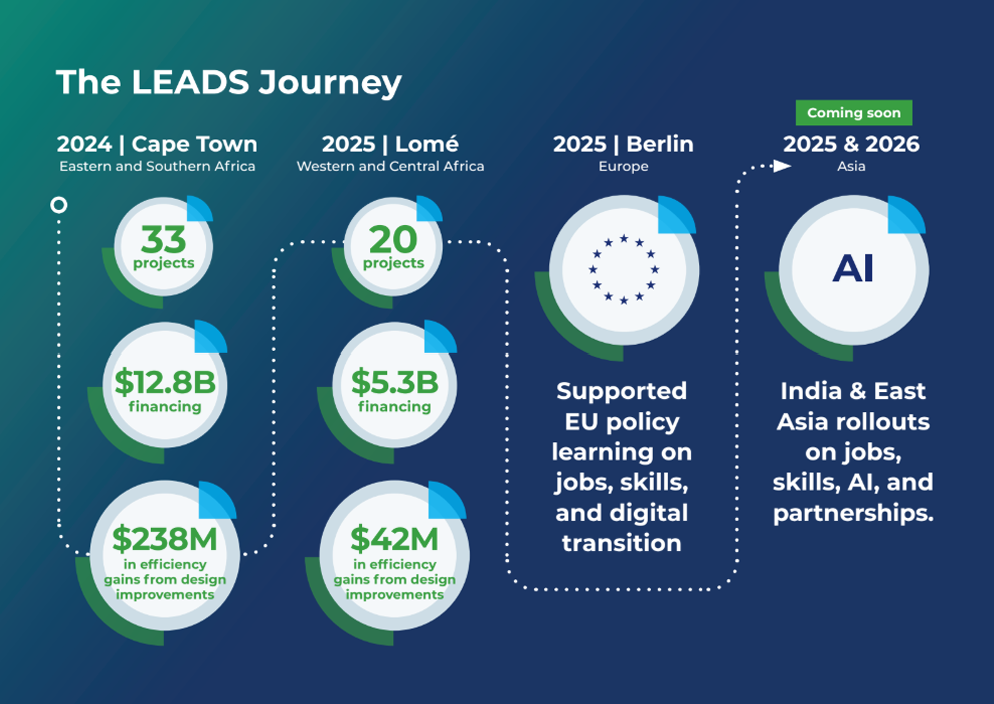
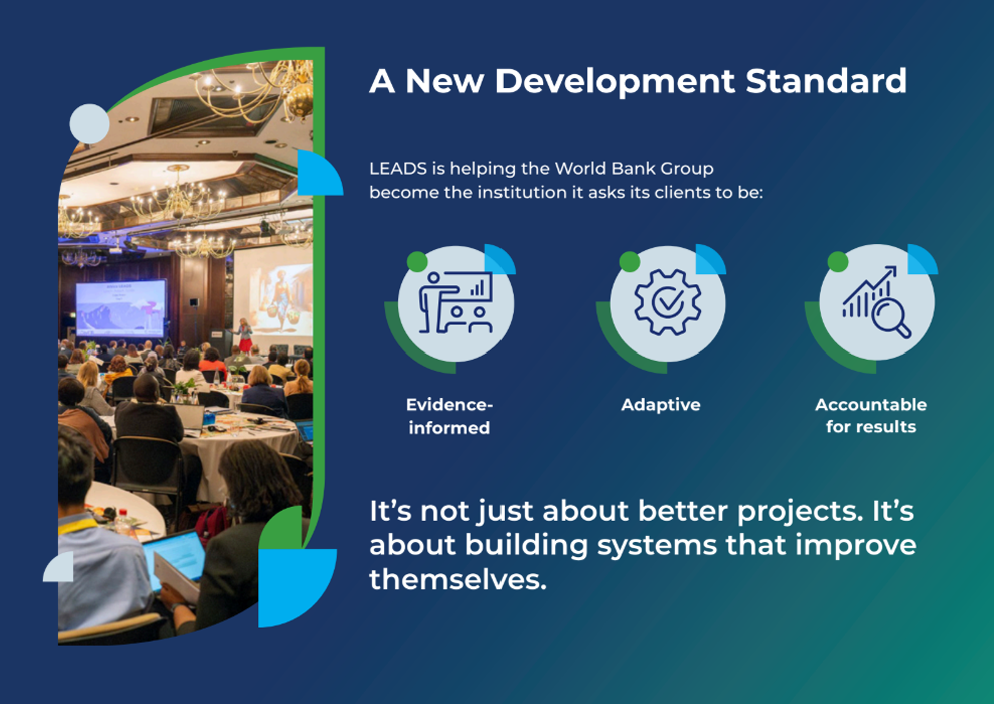
LEADS is about building systems that improve themselves, strengthening individual capacity and institutional systems. Experience from recent LEADS workshops in Africa, Europe and South Asia demonstrates that this approach can significantly improve delivery: helping teams move forward faster, identify millions of dollars in efficiency gains, and increase their impact.
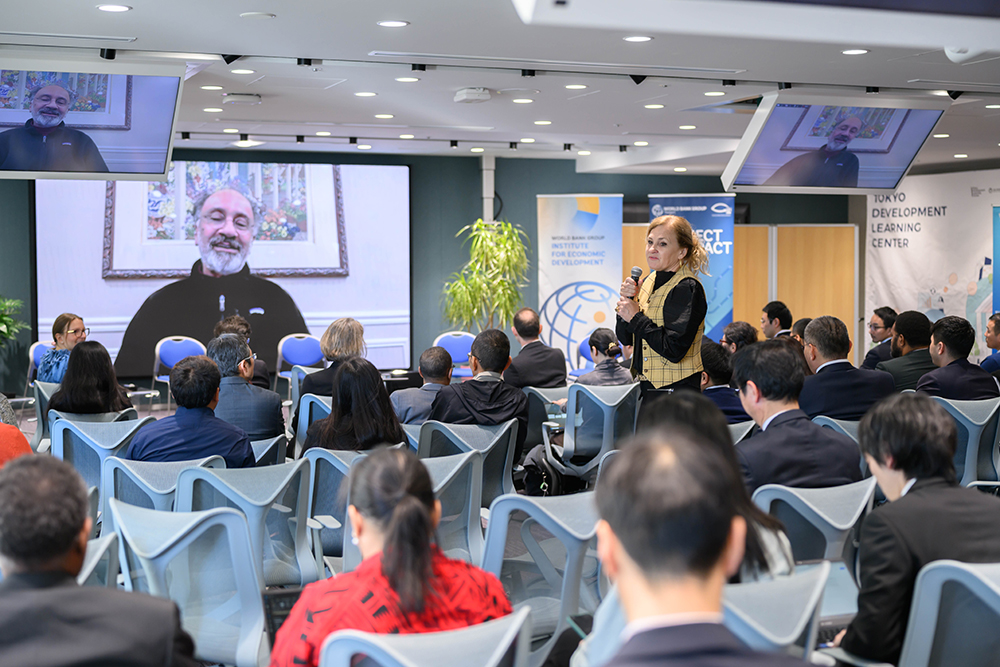
By convening expertise across multilateral institutions and government partners, Tokyo LEADS helped strengthen collaboration, expanded the use of evidence in operations, and supported teams to learn faster, adapt more effectively, and maximize development impact.
Related Content