Women are half of the world’s population, but only half of women are in the workforce, and their rights are enforced only half of the time. No economy can run at full strength while half its people live at half their potential. By embracing legal gender equality, countries can unlock the full potential of their population, leading to economic growth. Closing the gender gap in employment and entrepreneurship could raise the global gross domestic product by more than 20 percent.
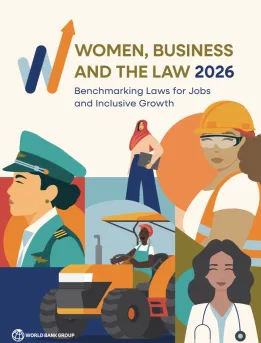
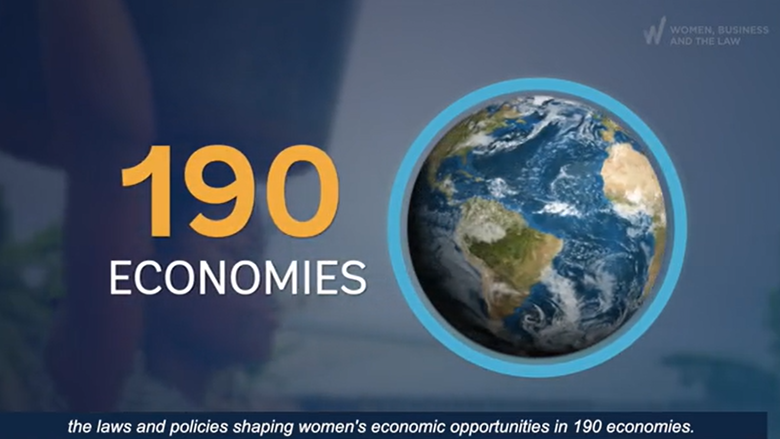
Women, Business and the Law 2026 is the eleventh edition of a global study that assesses the enabling environment for women’s economic opportunity across 190 economies. This year’s report further expands its scope beyond measuring laws (de jure) to present a consolidated framework built on three pillars: legal frameworks, supportive frameworks, and enforcement perceptions (de facto). It provides comprehensive data for each pillar across 10 key topics shaping women's access to jobs and entrepreneurship.
This topic page synthesizes policy messages from the report, along with key findings emerging from World Bank’s robust stream of policy-oriented analytical work on women, labor force participation, and economic empowerment.
Featured Content
Explore our curated insights, events, and learning opportunities to improve women's economic participation.



Key Policy Messages
These are major themes and messages emerging from the latest World Bank research on the enabling environment for economic opportunity for women. Click on each card to learn more and access related publications.
Reforming discriminatory laws is essential to economic development
Reforming discriminatory laws is essential to economic development
Gender inequality harms everyone. Countries should:
- Address gender-based violence against women
- Mandate equal remuneration for work of equal value, equal retirement benefits for women, and gender equality on inheritance law and land rights
- Require gender-sensitive criteria for public procurement, remove obstacles to women related to participating in international trade, and lift restrictions to the jobs that a woman can perform
- Invest in childcare laws to bring more women into the labor force
Countries should invest in closing implementation gaps
Countries should invest in closing implementation gaps
Economies have, on average, established less than 40% of the policy mechanisms needed for implementing laws on the books related to gender equality. Yet passing a law without implementing it is like writing a letter but never mailing it. Effective legal implementation depends on many factors, e.g.:
- Pay transparency measures and enforcement mechanisms to address the gender pay gap, and guidelines on flexible work arrangements
- Specialized bodies to receive complaints on gender-based workplace discrimination
- A national strategy with a focus on women’s access to financial services
A legal and policy environment that supports women’s economic empowerment after having children is needed
A legal and policy environment that supports women’s economic empowerment after having children is needed
Nearly all economies performed poorly on childcare, according to a new Women, Business and the Law indicator tracking the provision of affordable and quality childcare services.
To strengthen the enabling factors for women’s workforce participation, countries should:
- Expand access to childcare
- Establish childcare quality standards
- Expand maternity and paternity leave provisions
- Prohibit the dismissal of pregnant women
Robust legal and supportive frameworks are needed to address violence against women
Robust legal and supportive frameworks are needed to address violence against women
One hundred and eighty-three economies have room to improve their legal frameworks addressing violence against women. To improve women’s safety, governments should:
- Prohibit child marriage (139 economies lack adequate legislation) and prohibit all forms of domestic violence
- Prohibit sexual harassment in the workplace, and in public spaces including on transport, in education, and online
- Prioritize legal and policy reform in countries affected by fragility, conflict, and violence (FCV) where women face higher risks of multiple forms of violence
- Provide health care services for women who survive violence
Countries can take steps to improve multiple aspects of women’s economic inclusion
Countries can take steps to improve multiple aspects of women’s economic inclusion
To promote equality of opportunity, governments can:
- Enact policies that support the financial inclusion of women
- Establish gender equality under the law to increase the likelihood that women-owned businesses will formalize
- Protect the rights and labor market inclusion of women with disabilities
- Establish quotas for women on public corporate boards
- Consider interventions that aim to shift gender norms, such as public information campaigns
Development stakeholders should address the gender data gap

Development stakeholders should address the gender data gap
What can be measured can be changed. Governments and development institutions must work toward filling data and knowledge gaps:
- Countries lack sufficient sex-disaggregated data on employment and entrepreneurship, property ownership, and unpaid care work, making it difficult to design appropriate policies to address gender disparities
- More research is needed on the most effective package of interventions (such as traditional business training programs and savings instruments) to support women-led enterprises
- Closing the gender data gap is critical to effective SDG monitoring