Business Ready (B-READY) is a World Bank Group corporate flagship report that provides a quantitative assessment of the business and investment climate worldwide. It offers a comprehensive data set and analysis of the factors that strengthen the private sector, by advancing the interests of individual firms as well as those of workers, consumers, potential new enterprises, and the natural environment.
As a new project, B-READY is in a three-year rollout phase, spanning 2024 to 2026. The 2025 report is an interim edition presenting data and emerging messages from 101 economies that represent all income levels and geographic regions. A full edition in 2026 will provide expanded global coverage and conclude the rollout period.

Key Policy Messages
This page highlights key policy messages from the B-READY report and synthesizes its findings on the drivers and mechanisms of private sector development. Click on each card to read more.
All economies have room for improvement to become fully business ready

All economies have room for improvement to become fully business ready
- B-READY 2024 index shows that no economy achieves perfect scores across all three pillars.
- While level of income is positively correlated with the B-READY score, examples from Rwanda and Georgia show that an economy can be business ready regardless of income level.
- Countries should continually refine regulations and adopt international best practices to attract more private investment and generate more job creation.
Balancing firm flexibility and social benefits are key to a sound business environment

Balancing firm flexibility and social benefits are key to a sound business environment
Effective policies ensure businesses can operate efficiently while also safeguarding workers’ rights, consumer interests, and environmental sustainability. For a well-balanced regulatory framework, economies should:
- Implement flexibility that allows businesses to adapt while ensuring worker protections.
- Strengthen corporate responsibility policies that align business growth with social welfare.
Digitalization Enhances Business Environments

Digitalization Enhances Business Environments
Digital public services reduce bureaucratic delays and enhance business compliance. Countries with fully online business processes attract more startups and foreign investors. Estonia, for example, has one of the world’s most advanced digital public service systems, allowing businesses to register online in minutes. To do this, economies should:
- Implement E-government services to improve transparency and enhance regulatory efficiency in business registration, tax filing, and permit applications
- Invest in nationwide digital infrastructure, including broadband expansion and mobile connectivity.
Closing the public services gap is essential

Closing the public services gap is essential
Even in countries with strong business regulations, inefficient public service delivery remains a major obstacle. While the “public services gap” is most pronounced in lower-income economies, it poses challenges in high-income countries as well. To effectively close this gap, governments should:
- Streamline administrative procedures to reduce complexity and delays.
- Establish support facilities that help businesses comply with regulations and engage effectively with institutions.
- Invest in infrastructure that enables and facilitates business operations
Importance of Data-Driven Decision Making

Importance of Data-Driven Decision Making
- Ground truth matters: Effective policy should be informed by real-world data collected directly from businesses, not just theoretical models or assumptions.
- Understand actual impact: Using on-the-ground insights helps policymakers grasp how regulations affect businesses in practice, leading to more targeted and practical reforms.
Economies do not need to be rich to develop a good business environment
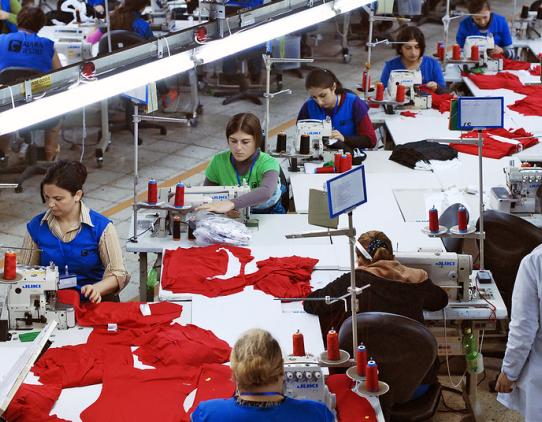
Economies do not need to be rich to develop a good business environment
- Wealth isn't the only factor for a good business environment. Economies across all income levels can facilitate the operational efficiency of firms.
- For example, Colombia, Georgia, Rwanda, and Togo perform well on Regulatory Framework. Rwanda also performs well in Public Services and Operational Efficiency.