May 21, 2026
 Pretoria, South Africa
Accelerating Productivity, Job Creation & Growth for Business Enterprises in South Africa
Economic growth is never easy — but for middle-income countries, it is slower, harder, and more structurally constrained. How can they break free from the so-called middle-income trap? What reforms in education, talent allocation, institutional strength, and energy strategy are most vital? The Growth Academy offers a space to confront these questions, and to reimagine policy grounded in the realities of each country's unique development path.
The Growth Academy Africa: Accelerating Productivity, Jobs, and Firm Growth in South Africa is part of a prestigious global series co-led by the World Bank Group and the University of Chicago. It grought together policymakers, economists, and practitioners to address South Africa's — and the region's — most pressing growth challenges.
Co-organized by the World Bank Group Institute for Economic Development, the Growth Academy, and the African Union Development Agency (AUDA‑NEPAD), with the generous support from the Ministry of Finance, Japan / Government of Japan through the Knowledge for Change Program, the Growth Academy Africa convened key national institutions, financial actors, academia, and think tanks to share evidence, align institutional priorities, and identify reforms to support enterprise-led growth. It also drew practical lessons that can be applied across the region, supporting Agenda 2063, STISA‑2034, and Africa’s broader economic transformation.
Read more about the discussions in Pretoria: Africa’s Growth Challenge: Scaling Firms, Productivity, and Jobs.
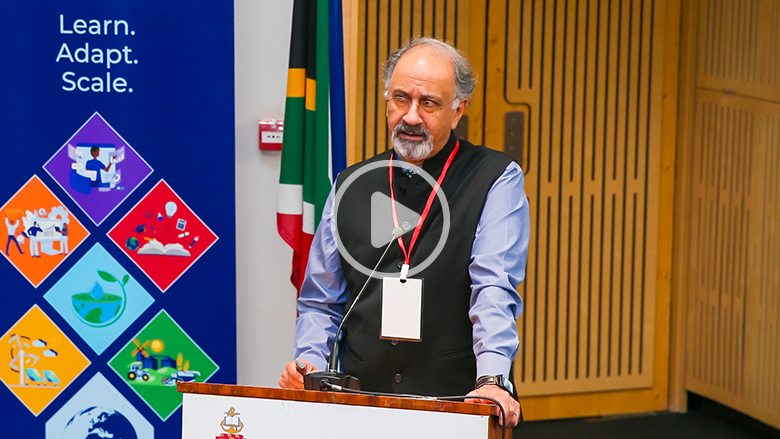
Keynote Address: Africa’s Next Growth Chapter: How to Avoid the Middle-Income Trap and Create Jobs at Scale.
Indermit Gill, Chief Economist of the World Bank Group and Senior Vice President for Development Economics.
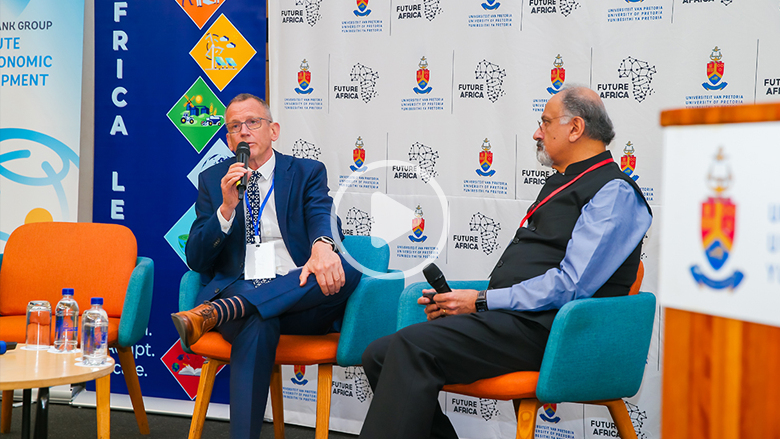
Fireside Chat: From South Africa’s Growth Challenge to Africa’s Future.
Indermit Gill, Chief Economist of the World Bank Group and Senior Vice President for Development Economics, and Jakkie Cilliers, Chairman of the Institute for Security Studies Board of Trustees and head of the African Futures and Innovation Program in the Pretoria office of the Institute.
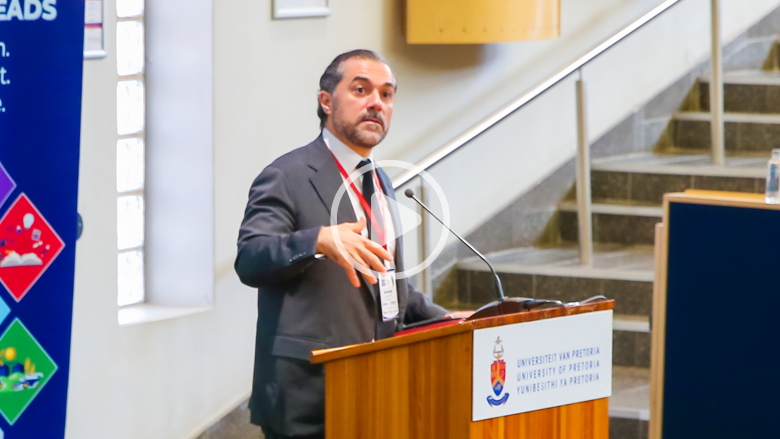
South Africa’s Growth Challenge: Jobs, Productivity, and Policy Priorities.
Ufuk Akcigit, Arnold C. Harberger Professor of Economics and Co-Director of the Growth Academy at the University of Chicago.
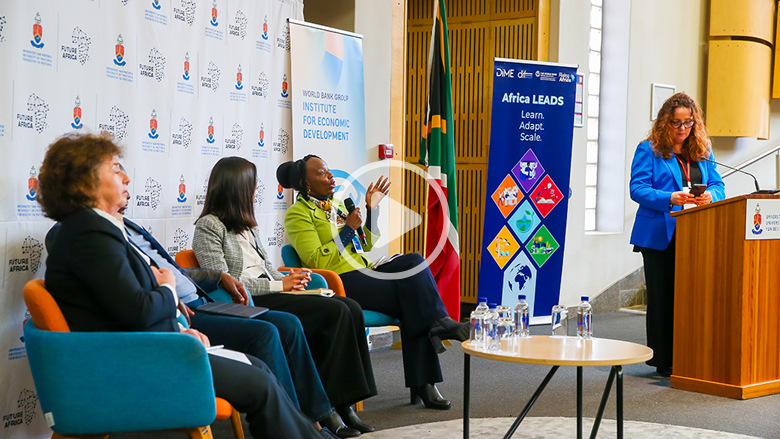
From Diagnosis to Delivery: South Africa’s Growth, Jobs, and Reform Agenda.
A panel conversation moderated by Francesca Lotti, Program Manager, World Bank Group Institute for Economic Development, featuring Rachel Chikwamba, Group Executive for Advanced Chemistry and Life Sciences, Council for Scientific and Industrial Research (CSIR); Risenga Maluleke, Statistician General, Statistics South Africa - StatsSA; Aalia Cassim, Acting Chief Director: Microeconomic Policy, National Treasury of South Africa; and Ann Bernstein, Executive Director, Centre for Development and Enterprise, South Africa.
Quality Infrastructure, Connectivity, and Jobs in Africa — Lessons from Japan’s Partnership Experience.
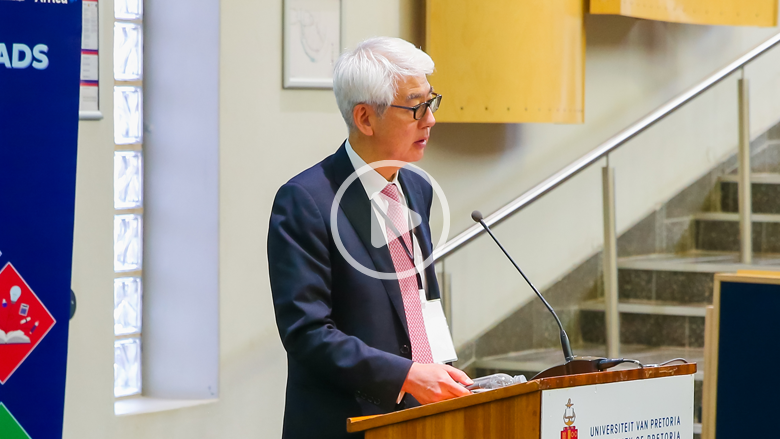
Tetsushi Sonobe, President of the Japanese Association for Development Economics (JADE), Japan.
Growth and Firm Dynamics in Africa
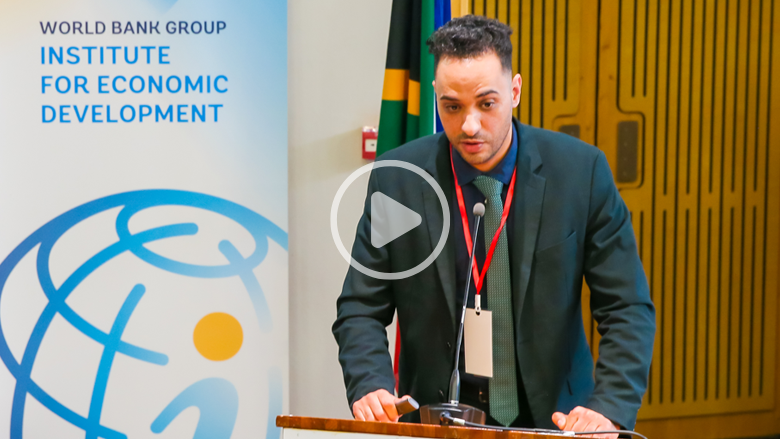
Presentations from Mahmoud Arbouch, Policy Center for the New South, Morocco; Richmond Atta-Ankomah, Institute of Statistical, Social and Economic Research (ISSER), University of Ghana; and Eyayu Tesfaye Mulugeta, Addis Ababa University, Ethiopia. Follow up discussion moderated by Roberto J. Fattal, Senior Economist, World Bank Development Economics Research Group, Africa Growth Team.
What Works? Scaling Firms for Productivity, Innovation, and Jobs
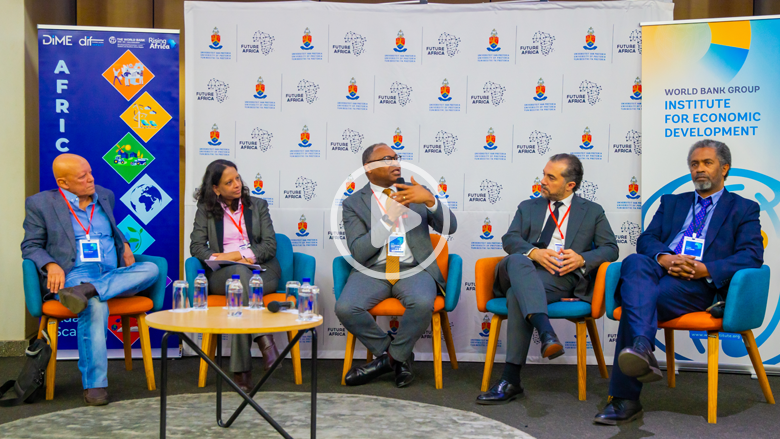
A panel conversation moderated by Roberto J. Fattal, Senior Economist, World Bank Development Economics Research Group, Africa Growth Team, featuring Abbi M. Kedir, Research Director, African Economic Research Consortium, AERC; Smita Kuriakose, Lead Economist in the Finance, Competitiveness and Innovation Global Practice, World Bank; Mario Scerri, Independent Academic; Ufuk Akcigit, Arnold C. Harberger Professor of Economics and Co-Director of the Growth Academy at the University of Chicago; and Brando Okolo, Senior Advisor and Head of the Science, Technology and Innovation Office, AUDA-NEPAD.
All times listed below are in South African Standard Time (SAST).
| May 21, 2026 | |
| 08:30 – 09:00 | Registration & Welcome Coffee |
| 09:00 – 09:30 | Welcoming Remarks
|
| 09:30 – 10:15 | Keynote Address
Audience Q&A |
| 10:15 – 10:45 | Fireside Chat Indermit Gill, Chief Economist of the World Bank Group and Senior Vice President for Development Economics, in conversation with Jakkie Cilliers, Chairman of the Institute for Security Studies Board of Trustees and head of the African Futures and Innovation Program in the Pretoria office of the Institute. |
| 10:45 – 11:30 | Coffee / Tea Break |
| 11:30 – 12:15 | South Africa’s Growth Challenge: Jobs, Productivity, and Policy Priorities
Audience Q&A |
| 12.15 – 13.15 | Panel Discussion Moderator: Francesca Lotti, Program Manager, World Bank Group Institute for Economic Development
Audience Q&A |
| 13:15 – 14:30 | Lunch Break |
| 14:30 – 15:00 | Quality Infrastructure, Connectivity, and Jobs in Africa — Lessons from Japan’s Partnership Experience Tetsushi Sonobe, President of the Japanese Association for Development Economics (JADE), Japan |
| 15:00 – 16:00 | Growth and Firm Dynamics in Africa
Audience Q&A |
| 16:00 – 16:30 | Coffee / Tea Break |
| 16:30 – 17:30 | Panel Discussion Moderator: Roberto J. Fattal, Senior Economist, World Bank Development Economics Research Group, Africa Growth Team
Audience Q&A |
| 17:30 – 18:00 | Closing Remarks
|
| 18:00 – 19:00 | Networking Reception |
The Growth Academy, co-led by the World Bank Group and the University of Chicago, has previously convened leading thinkers and policymakers in Chicago, Washington D.C., Cairo, Bucharest, and Jakarta. Each edition builds a bridge between rigorous analytics and actionable country strategies, fostering partnerships that have shaped growth debates in more than 30 countries.
The Growth Academy is a living version of the World Development Report 2024: The Middle-Income Trap. It puts the report's findings into practice by helping countries design policies that drive innovation and growth.