March 02, 2026
 Rome, Italy | FAO Headquarters
Standards for Development: Implications for Agrifood Systems
Also available in French here.
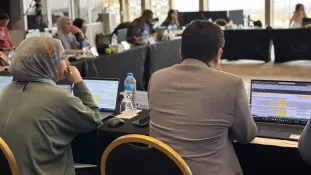
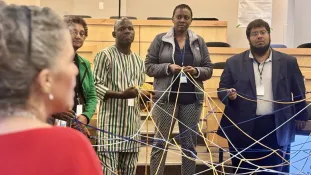
Watch the replay of “Standards for Development – The Evolving Landscape of Global Standards: Implications for Agrifood Systems,” an event hosted by the World Bank Group Institute for Economic Development in partnership with the Codex Secretariat. The event took place on March 2, 2026, at the Sheikh Zayed Centre, FAO Headquarters in Rome, Italy.
Featuring leading experts, the event offered participants who joined in person and online a clear and comprehensive overview of the current global standards landscape. World Bank Group experts presented key findings from the World Development Report 2025: Standards for Development, and explored their implications for agrifood systems.
The discussion highlighted the increasingly important—yet often invisible—role of standards in shaping agrifood trade, food safety, competitiveness, and inclusive growth. Speakers shared how standards only work when they are supported by strong systems, coordination, and ownership. Without adequate capacity in labs, inspection services, veterinary and plant health systems, standards risk becoming barriers rather than pathways, particularly for smallholders and agricultural SMEs in low- and middle-income countries.
All times listed below are in Central European Time (CET).
| March 2, 2026 | |
| 15:00 - 15:10 | Opening Remarks Moderator: Romina Cavatassi, Program Manager, Institute for Economic Development, World Bank Group
|
| 15:10 - 15:35 | Presentation of the World Development Report 2025 Key messages from the WDR 2025: Standards for Development report with emphasis on agrifood systems
|
| 15:35 - 16:05 | Panel Discussion: Perspectives from Codex, IPPC, and agrifood investments, value-chains and country perspectives Panelists:
|
| 16:05 - 16:20 | Q&A Moderated discussion with participants |
| 16:20 - 16:30 | Wrap-up and Next Steps Key takeaways from the discussion and closing remarks |
 | Catherine Bessy |
 | Sarah Cahill |
 | Gero Carletto |
 | Romina Cavatassi |
 | Xavier Gine |
 | Enrico Perotti |
 | Máximo Torero Cullen |
 | Lucas Zavala |
Standards make everyday life run smoothly—often invisibly. When they work, they build trust and allow people and firms to trade, innovate, and grow; when they fail, disruptions are immediate and costly. Standards are the hidden foundations of prosperity: nearly 90 percent of world trade is now shaped by nontariff measures - most linked to standards - many of which directly affect agrifood products. This makes the ability of food producers to adapt, align, and participate in international standard‑setting essential for maintaining market access and competitiveness. Standards are a form of hidden infrastructure, and their importance is rising as countries navigate increasingly complex requirements linked to globalization, technology, and growing expectations around safety, sustainability, and transparency.
The World Bank World Development Report 2025: Standards for Development offers a comprehensive assessment of today’s global standards landscape and a practical framework for how countries can adapt, align with, and shape standards to accelerate economic development.
Standards are particularly critical for agrifood systems—including agriculture, food processing and distribution, forestry, and natural-fiber textiles—where a large share of global trade is shaped by non-tariff measures linked to standards. For many low- and middle-income countries, the challenge lies not only in adopting standards but in building laboratories, inspection services, certification bodies, and traceability systems that allow standards to enable rather than constrain inclusive growth.