Adopt and Adapt: How Countries Can Make AI Work for Local Development
For developing countries, the most useful AI may not be the most advanced. It is the AI that best understands the people it serves.
"Development challenges vary considerably across countries and communities, and solutions must reflect local languages, cultures, institutions, and priorities," said Gaurav Nayyar, Economic Advisor and Director of the World Development Report 2026 (WDR 2026).
His point, and one of the report’s core messages is that developing countries don't have to build frontier AI themselves. They can draw on tools that already exist and adapt them to local contexts. Building AI independently, Nayyar noted, is "a very expensive process out of the reach for most developing economies in the world today." Adopting existing tools and adapting them puts AI's benefits within reach of many more countries.
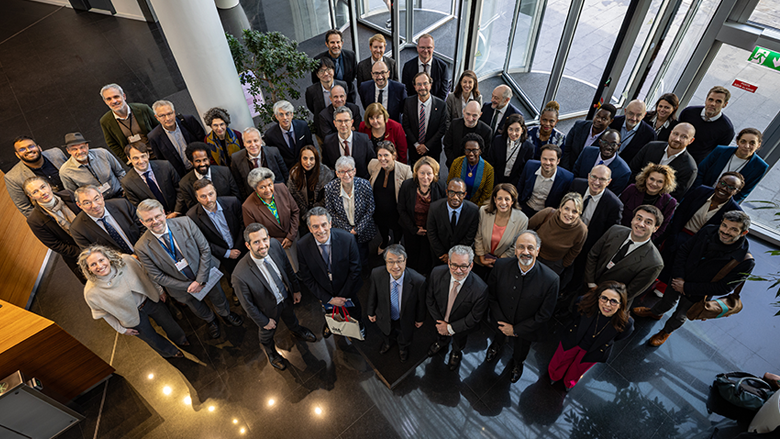
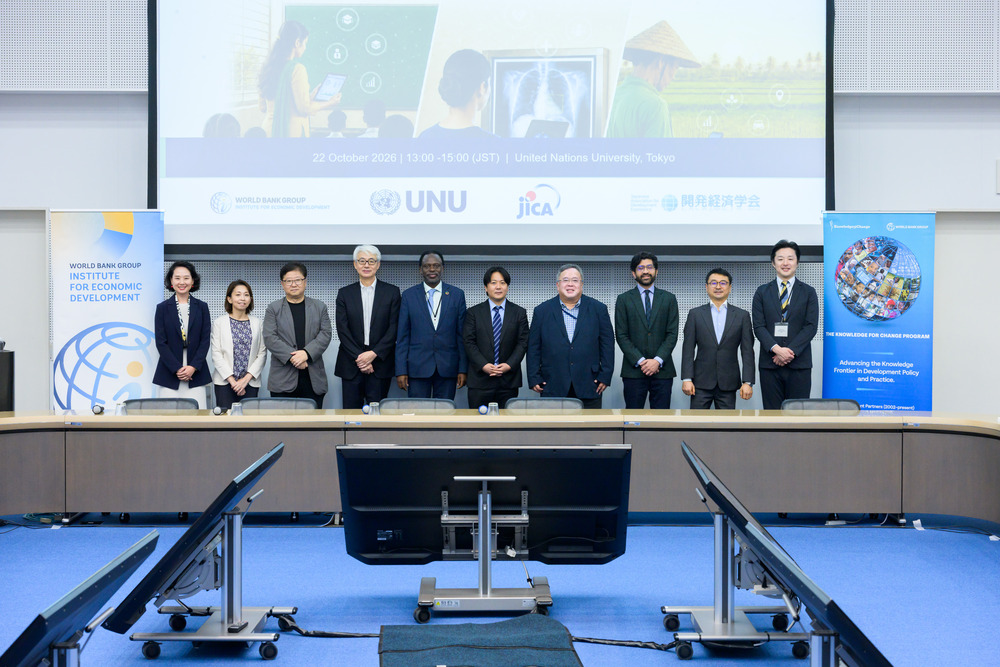
Nayyar spoke at The Promise of Artificial Intelligence Impact Exchange in Tokyo, Japan, where the findings of WDR 2026 were presented. The World Bank Group Institute for Economic Development (IED) implemented the event in partnership with the United Nations University (UNU), with support from the Knowledge for Change Program (KCP). About 300 participants joined in person and online, including policymakers, researchers, development practitioners and private sector representatives from Japan and around the world. Speakers looked at AI adoption from several perspectives and proposed ways to make sure developing countries share in the benefits of this new technology.
Acting now, with national ownership
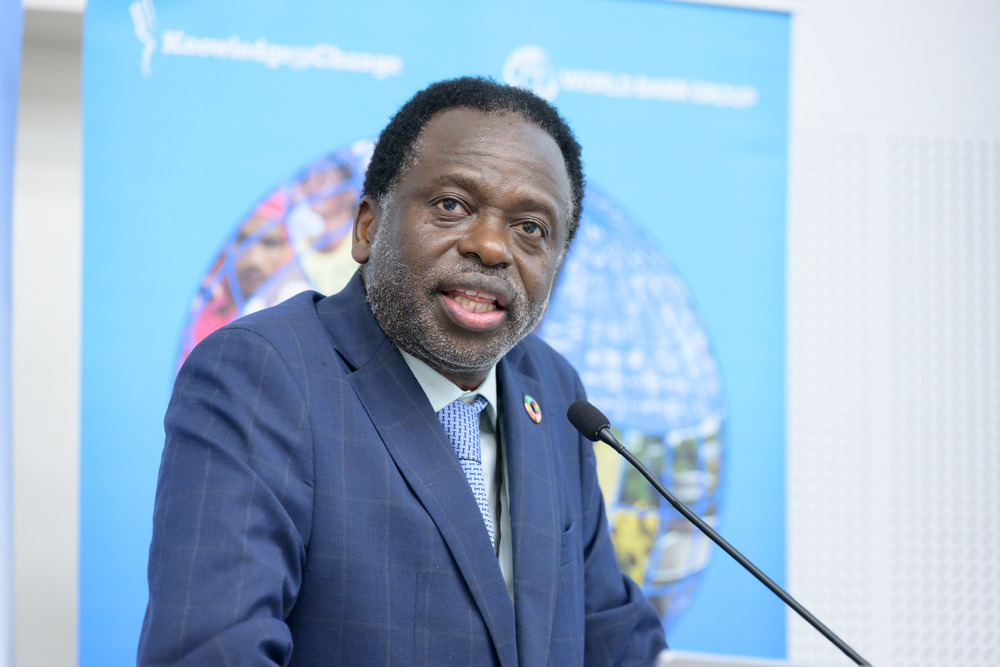
Tshilidzi Marwala, UNU Rector and Under-Secretary-General of the United Nations, in his opening remarks, stressed that countries cannot afford to wait. "We must bridge the digital divide now, because waiting for perfect infrastructure means leaving entire economies behind in the age of AI," he said. "The transformative potential of AI is not automatic; it requires deliberate, coordinated investment in foundational technologies and human capital." Global cooperation is necessary, he added, but "the primary responsibility for creating an AI-ready environment lies with national policy frameworks."
We must bridge the digital divide now, because waiting for perfect infrastructure means leaving entire economies behind in the age of AI
-Tshilidzi Marwala, UNU Rector and Under-Secretary-General of the United Nations
Takaaki Nomoto, Director of the Multilateral Development Banks Division at Japan's Ministry of Finance, also speaking at the event, focused on how AI spreads through an economy. He said AI adoption is most effective when it is embedded in existing regional supply chain networks. "We cannot treat AI as a standalone sector; it is a horizontal technology that fundamentally alters the efficiency of every other industry."
What stands in the way
Even when tools are available, adopting AI is not straightforward. In the report's survey of businesses in developing countries, Nayyar said, one in four reported a lack of knowledge, information or awareness about AI solutions as an obstacle. One in four also named the cost of acquiring AI as a major barrier.
Where businesses and governments do get past these barriers, a second challenge remains: making sure AI actually delivers results. "Today, we live in a world of AI experiments, AI pilots, AI use cases," Nayyar said. "But we need to remind ourselves that use cases are not the same as development outcomes."
Governments can help close both gaps, he argued, through their roles as enablers, users and regulators of AI. As enablers, they can help firms overcome the knowledge and cost barriers. As users and regulators, they can build the public trust that AI services need to scale. "Data security and algorithmic transparency are not merely technical requirements—they are the bedrock of the trust needed for public adoption of AI services," he said. Prioritizing local content and data relevance, he added, makes AI solutions useful to the people they are meant to serve.
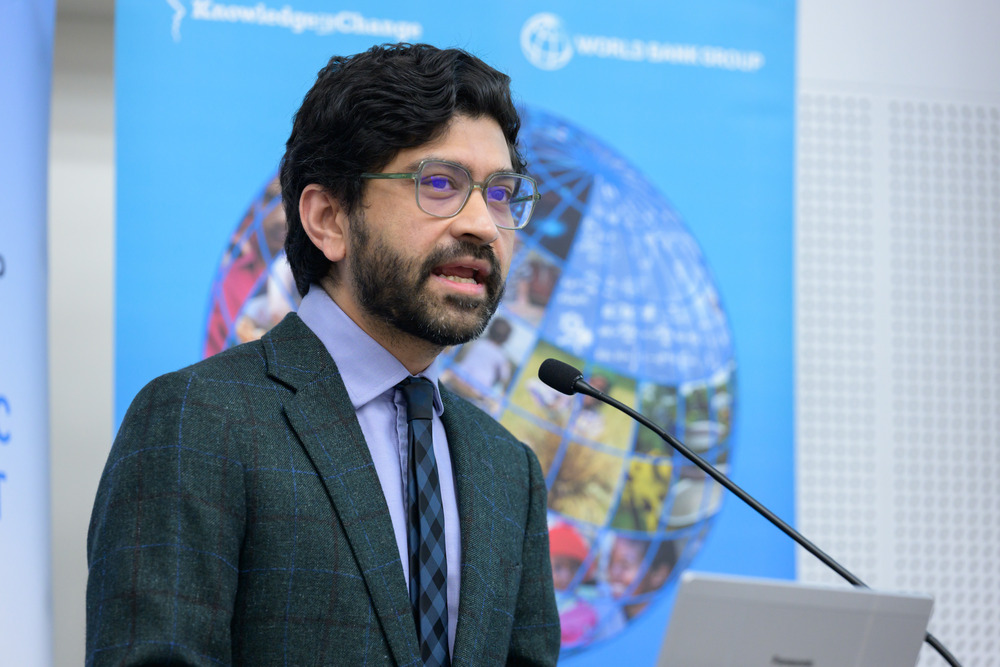
Data security and algorithmic transparency are the bedrock of the trust needed for public adoption of AI services
-Gaurav Nayyar, Economic Advisor and Director of the
Evidence from East Asia
Franziska Ohnsorge, Chief Economist for Asia at the World Bank Group, in the second keynote presentation, showed how the knowledge gap appears in firm-level data. In India and Thailand, 70 to 80 percent of firms expected near-zero productivity gains from AI over three years, largely because they "haven't figured out how to use it yet." For many firms, she said, the main barrier is not only cost but knowing how to use AI to raise productivity.
Labor markets are shifting too. In East Asia, employers hiring for AI skills increasingly look for foundational and complementary skills such as math, communication, collaboration and critical thinking. These skills are four to 16 times more likely to appear in AI-related job postings. Suppliers in global value chains are adapting by hiring for these skills and have seen no significant negative effect on their hiring. Multinational affiliates, by contrast, have been more prone to outsourcing jobs that AI can substitute.
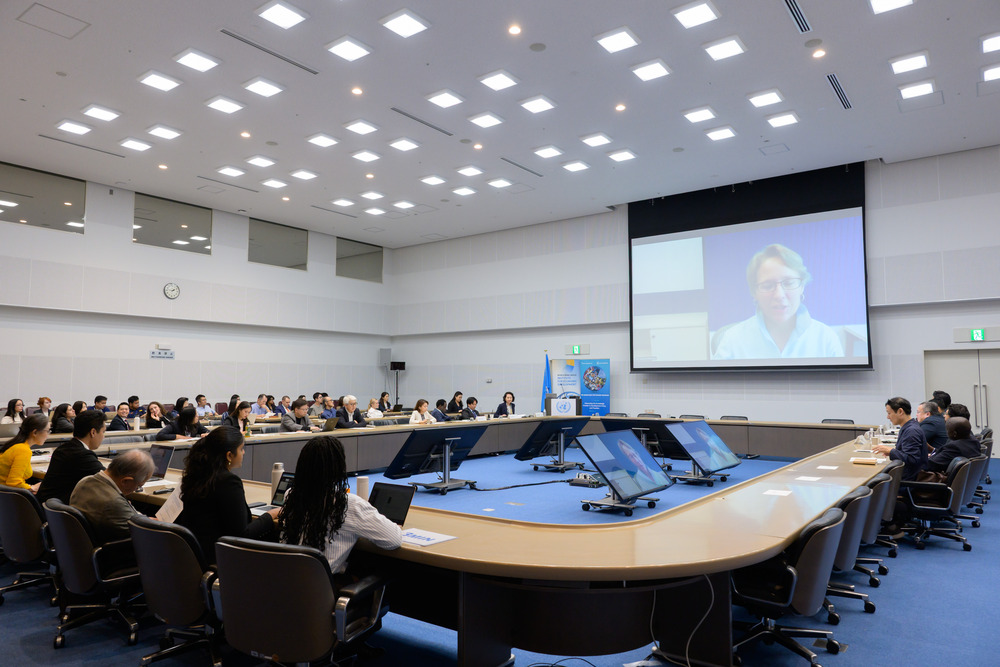
Perspectives from the panel
With this background, how then can Asia harness the power of AI for development? Kerina Wang, Program Manager and Head of the Institute for Economic Development (IED) Tokyo Center, put that question to the panel. It brought together leaders from the Asian Development Bank Institute, the Japan International Cooperation Agency, Juntendo University and the World Bank Group. Their answers ran from national policy to individual skills.
Bambang Brodjonegoro, Dean and CEO of the Asian Development Bank Institute, started with governments. Policymakers in middle-income developing Asia, he said, often see AI first as a threat to jobs. His answer was a national AI strategy that makes AI central to economic development planning. A strategy like that helps convince finance ministers to fund AI. It also pushes governments to deal with risks such as job losses at the outset, so countries don't take up AI without asking whether it will deliver lasting benefits. "Those are the things that I think should be treated from the very beginning," he said.
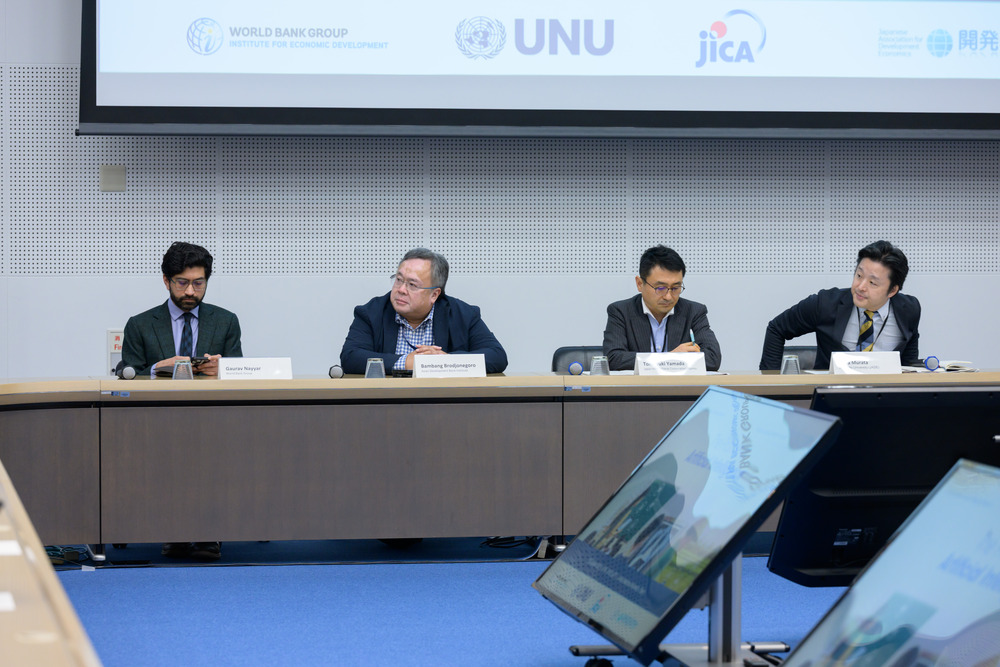
Tomoyuki Yamada, Senior Director at the Japan International Cooperation Agency (JICA), said a national strategy only works if it fits the country. Partner governments often ask JICA for help with AI policies and roadmaps, but no single model applies to all of them. Each roadmap has to reflect the country's own situation. Making that happen takes people. Countries need professionals who can adapt AI to local needs, not only people who can use it. He pointed to Cambodia as an example. There, a Japanese AI developer invited by JICA improved the central bank's forecasts of local currency volume by 30 to 40 percent, and the bank is now working to adopt the tool.
Akira Murata, Associate Professor at Juntendo University, picked up the question of skills. Many people already use AI, he said, but few use it in depth, and even young people often "just touch the surface." Professional knowledge is becoming more important, not less, because people have to understand what AI produces, take responsibility for it and explain it. AI is changing quickly, so he called for AI literacy built on continuous learning: focus on relevant tasks, practice repeatedly, and apply kaizen, the Japanese principle of continuous improvement.
Gaurav Nayyar brought the discussion back to the report's main challenge. Strategies, local talent and skills all matter, but the hard part is getting from pilots to scale. That, he said, is "a big message that policy makers need to take from this report."
Download the World Development Report 2026 to learn more.