Industrial Policy in Africa Needs Systems, Scale, and State Capacity

Industrial policy has returned to the center of global development debates. Across advanced and emerging economies, governments now use industrial tools to shape the structure of production, strengthen value-chain and its resilience, and support job creation and market access. In Africa, this conversation carries high stakes: an industrial policy that must work in tighter fiscal space, deep infrastructure and technological gaps, large informal labor markets, and fast-growing youth populations.
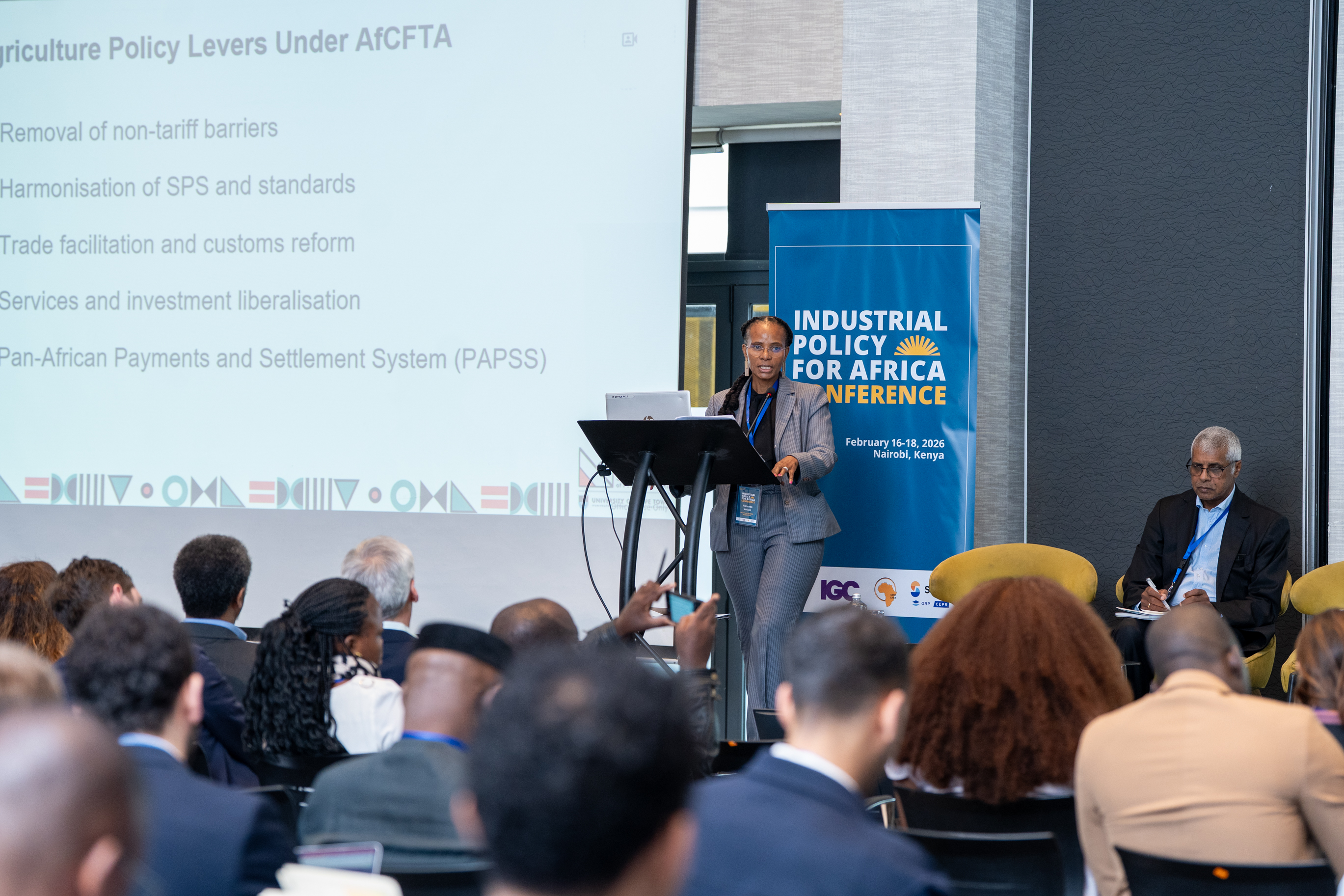
In collaboration with partners from African Economic Research Consortium (AERC), STEG and IGC, the World Bank Group Institute for Economic Development’s Industrial Policy for Africa Conference brought this reality into focus last month in Nairobi. The core question across sessions: what would it take for industrial policy to deliver growth, jobs, and productivity in African economies today?
Three insights stood out from the research and policy dialogue.
1. Industrial policy works not just in sectoral terms, but as an overall system
The evidence presented across sessions reinforced a fundamental reality. Industrial policy excels when it operates as a system of capabilities rather than as a set of isolated sector choices. In simpler terms: long term investment in infrastructure, trade integration, and macroeconomic stability shapes whether targeted sector strategies can scale. Country cases have shown that success follows the presence of reliable power, logistics, access to markets, and predictable rules. These foundations shape firm entry, investment horizons, and learning.
This systems view shifts the debate away from ‘which sectors to pick.’ The practical challenge is to make policy work as a package: coordinate across ministries, align skills and training with what firms need, and build feedback loops so policies are adjusted based on firms’ performance and needs. Research presented at the conference highlighted how Special Economic Zones, export promotion, and firm support programs generate uneven effects when coordination across land use, energy access, finance, and workforce development falls short. Implication for policy design: industrial policy works only if governments can connect infrastructure, trade rules, skills, and firm support into one coordinated implementation plan.

2. Regional integration shapes the ceiling for industrial upgrading
Sessions on the African Continental Free Trade Area (AfCFTA) and regional trade placed scale at the center of industrial outcomes. Firm growth and productivity upgrades depend on access to markets that are large enough to sustain investment in technology, standards, and managerial capacity. Border, market and non-market frictions, fragmented regulations, uneven standards and logistics costs, simultaneously, shape the effective size of African markets, sometimes more than formal tariff schedules. Research presented at the conference showed how market access shapes firm entry, export behavior, and the geography of foreign direct investment.
Regional integration therefore functions as an industrial policy infrastructure. Trade facilitation, regulatory cooperation, and transport corridors influence firm behavior in the same way that tax incentives or credit lines do. Without scale, domestic industrial strategies face binding constraints. With scale, learning effects, competition, and supply chain development become feasible. The policy implication is operational: trade integration and domestic reform require coordination. Customs reform, standards agencies, transport logistics, and competition policy shape whether AfCFTA supports industrial upgrading rather than simple trade diversion.
3. Technology policy must align with labor markets and services
Evidence on manufacturing readiness, services productivity, and innovation highlighted the structure of African labor markets. Services already absorb a large share of employment. Informal firms and small enterprises dominate job creation. Technology policy is economy-wide: it runs through services, logistics, finance, and agrifood systems—not manufacturing alone.
Research on productivity growth showed strong gains within sectors in services such as logistics, retail, and food processing. These gains connect directly to industrial upgrading through supply chains.
Industrial policy in Africa will deliver only when it is built as a coordinated system—backed by state capacity, scaled through regional integration, and matched to the realities of labor markets and services—so firms can invest, learn, grow, and create jobs.
Watch the keynote presentations at the Industrial Policy for Africa Conference and download the Industrial Policy for Development Report.
Related Content
- The Case of Industrial Policy in Africa
- Industrial Policy in Action: Morocco’s Path toward Green Competitiveness
- From Trade Integration to Industrial Transformation: The AfCFTA Agenda
- Industrial Policy for Development Report
- Podcast - From Bananas and Pineapples to iPhones: A New Framework for Industrial Policy