Big Ideas for Development
Higher borrowing costs, demographic shifts, labor market pressures, and growing displacement are shaping policy debates across many parts of the world. At the same time, many governments are managing tighter fiscal conditions, while firms, workers, and public institutions are adapting to economic and social pressures that increasingly cross borders and sectors. These conditions have increased attention on policies that can operate at scale, respond to local realities, and remain effective under fiscal and institutional constraints.
The World Bank Group Institute for Economic Development launched Big Ideas for Development to create a platform for research-based ideas that address these challenges in practical terms. The initiative invited researchers to identify major development questions and propose actionable responses. It also reflects a broader effort to make development research more accessible to wider audiences. Research findings often circulate within specialized academic and policy communities, while many implementation debates unfold across governments, firms, think tanks, civil society organizations, and local institutions. Big Ideas for Development aims to bring these conversations closer together by presenting research in clear and accessible language while maintaining analytical rigor.
The first collection of papers examines several interconnected issues: financial resilience, forced displacement, workforce training, and international labor mobility. Together, the papers explore how institutions can respond to economic and social pressures while supporting growth, stability, and opportunity.
Preventive Restructuring and Local Capacity
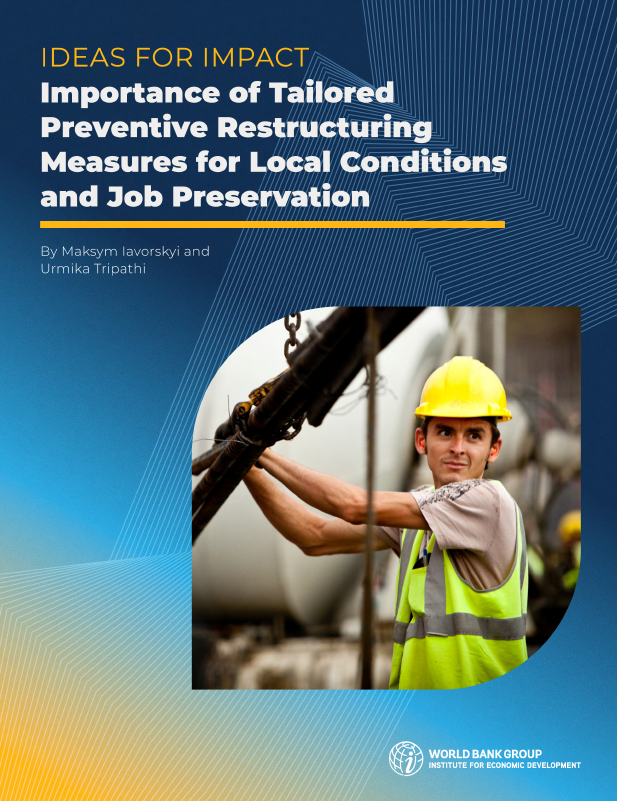
In the paper Importance of Tailored Preventive Restructuring Measures for Local Conditions and Job Preservation, the authors examine how insolvency systems can support firms facing financial distress before liquidity pressures deepen into broader solvency crises. The paper focuses on preventive restructuring mechanisms, which allow firms to restructure debt at earlier stages and with limited court involvement. The authors argue that legal reforms alone are often insufficient when judicial delays, procedural complexity, uneven digital infrastructure, or limited institutional capacity constrain implementation. The paper proposes three practical areas for reform: early warning tools that help identify distress sooner, technology systems that improve efficiency and transparency, and stronger stakeholder engagement throughout restructuring processes. The broader argument centers on institutional capacity and the importance of adapting insolvency reforms to local implementation conditions.
Forced Displacement and Economic Inclusion

In the paper Empowering Forcibly Displaced Populations and Their Hosts, the author examines how governments and institutions can support longer-term economic inclusion for displaced populations and host communities. Drawing on more than 250 experimental and quasi-experimental studies published between 2010 and 2024, the paper reviews policies related to self-reliance, labor market access, and inclusive social programs. It argues that access to livelihoods, documentation, and market participation can improve economic outcomes for displaced populations while also supporting host communities. The paper also examines how policy implementation varies across country contexts, particularly in economies with large informal sectors. Rather than advancing a single model, the paper emphasizes the importance of designing policies that reflect labor market realities, institutional conditions, and social dynamics within host countries.
Skills Training and Youth Employment
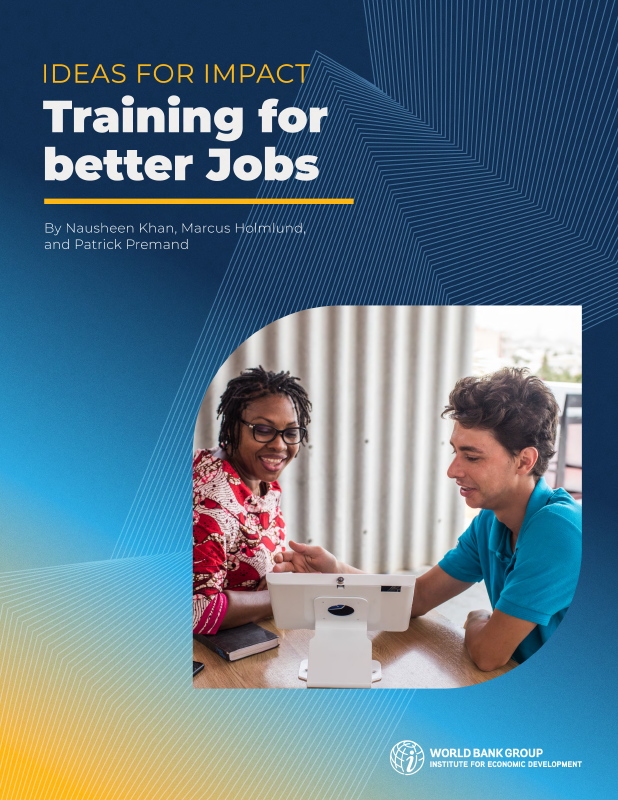
Training for Better Jobs: Building Skills, Engaging Firms and Scaling Effective Strategies examines how workforce training systems can respond more effectively to changing labor market needs. The paper reviews evidence from skills training programs across low- and middle-income countries and highlights several approaches associated with stronger employment outcomes. These include combining classroom instruction with practical work experience, strengthening collaboration between firms and training providers, and integrating soft skills into technical training programs. The paper also addresses questions of scale and implementation. Many workforce initiatives show promising results in smaller pilots yet face operational challenges when expanded across regions or national systems. By focusing on employer engagement and delivery mechanisms, the paper contributes to broader discussions about how training systems can remain responsive to labor market demand.
Global Skill Partnerships and Labor Mobility

The paper on Global Skill Partnerships examines how international worker mobility systems can respond to labor shortages, demographic pressures, and skills gaps across countries. Many higher-income countries are experiencing aging populations and rising demand for workers in sectors such as health care, construction, and technical services. At the same time, many lower-income countries are seeing rapid growth in youth populations alongside growing demand for jobs and training opportunities. The paper proposes three linked approaches: expanding legal migration pathways, investing in education and skills systems within origin countries, and building international partnerships that support training institutions and workforce development. The paper also examines how migration systems can be designed to support development gains for both origin and destination countries through coordinated investment and skills partnerships.
Read all the papers and stay tuned for the next edition of Big Ideas for Development.