From Trade Integration to Industrial Transformation: The AfCFTA Agenda
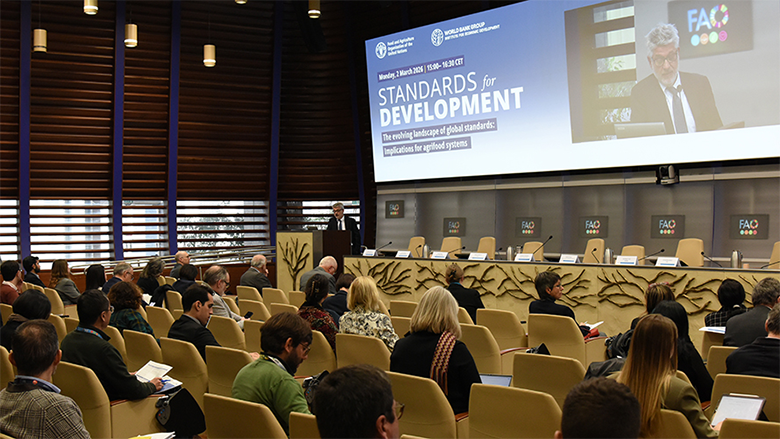
In their keynote presentation From Trade Integration to Industrial Transformation: The African Continental Free Trade Area (AfCFTA) Agenda during the Industrial Policy for Africa conference, Emeritus Professor Faizel Ismail, Nelson Mandela University and AfCFTA Trade and Industrial Development Advisory Council; and Dr. Noncedo Vutula, AfCFTA and Regional Integration; discussed the role of trade as a transformative development tool for the region.
Emeritus Professor Faizel Ismail reflected on Africa’s long journey toward economic integration and made a compelling case for the African Continental Free Trade Area as a transformative development project. He stressed that trade alone is not enough: regional integration must be anchored in values of solidarity and driven by industrialization, investment, infrastructure, and strong institutions.
Trade will create the framework, but the driver of regional integration has to be industrial value chains…trade is only a support mechanism for industrialization.
He also highlighted "developmental regionalism" as a pragmatic path for building competitive regional value chains—starting with textiles and apparel—while ensuring inclusion, sustainability, and shared prosperity across the continent.
Dr. Noncedo Vutula discussed how agricultural value chains can become a cornerstone of Africa’s industrial transformation under the AfCFTA. She highlighted agriculture’s central role in jobs, food security, and inclusive growth, while outlining the productivity gaps, infrastructure constraints, and trade barriers that continue to limit intra‑African trade.
Agriculture is one of Africa’s largest economic base. The AfCFTA provides the scale and policy framework, and regional value chains are the bridge to industry.
The address made a compelling case for shifting from fragmented national approaches to coordinated regional value chains—particularly in horticulture—supported by trade facilitation, agro‑processing, investment in infrastructure, and harmonized standards. She positioned AfCFTA as the scale and policy framework Africa needs to turn agriculture into a driver of industrialization, resilience, and shared prosperity.
Read more about the conference and watch additional sessions here.