Beyond Recovery: How Middle-Income Countries Can Build the Institutions and Policies for Lasting Prosperity
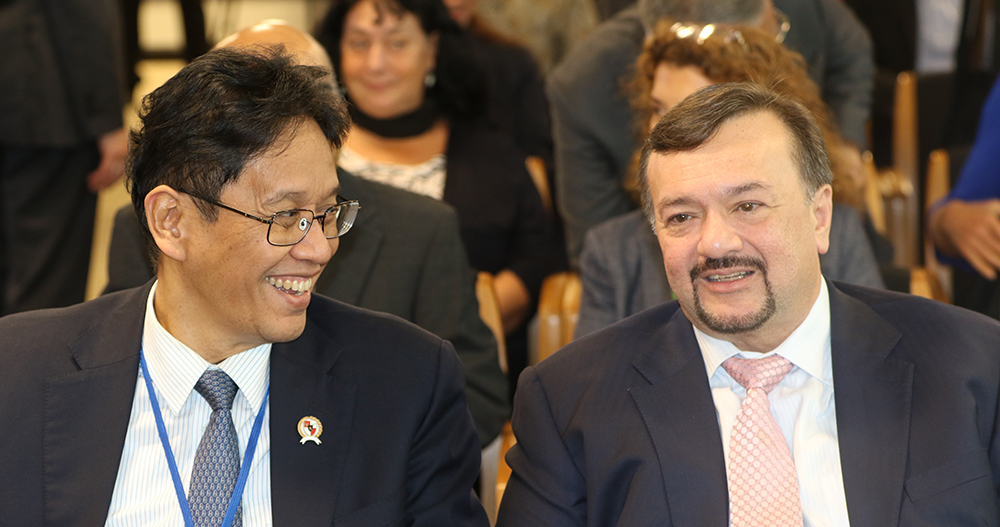
On the sidelines of the 2026 World Bank Group/IMF Spring Meetings, finance ministers, economists, and development experts gathered for a high-level dialogue with an urgent message: for middle-income countries, especially in Southeast Asia, recovery from recent crises is no longer enough. The path to high-income status demands something harder — structural transformation, institutional coherence, and the political will to reform when it is still a choice, not a necessity.
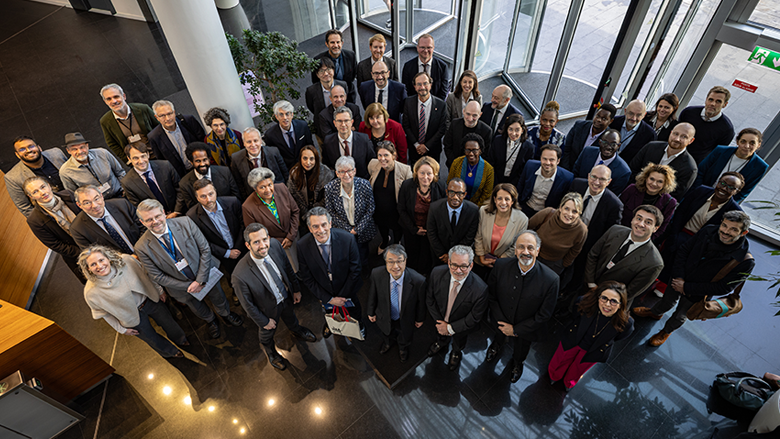
The event, Supporting Economic Recovery in Middle-Income Countries: Alignment of Higher Productivity and Quality Jobs Creation Amid High Indebtedness, was co-hosted by the Institute for Economic Development, the Asian Development Bank Institute (ADBI), and the Southeast Asia Voting Group (EDS 16) at the World Bank. It brought together a distinguished group of ministers, think tank leaders, multilateral economists, and academics to examine what it will truly take for middle-income countries to graduate to the next level of development.
Reform Is a Choice, Not a Last Resort
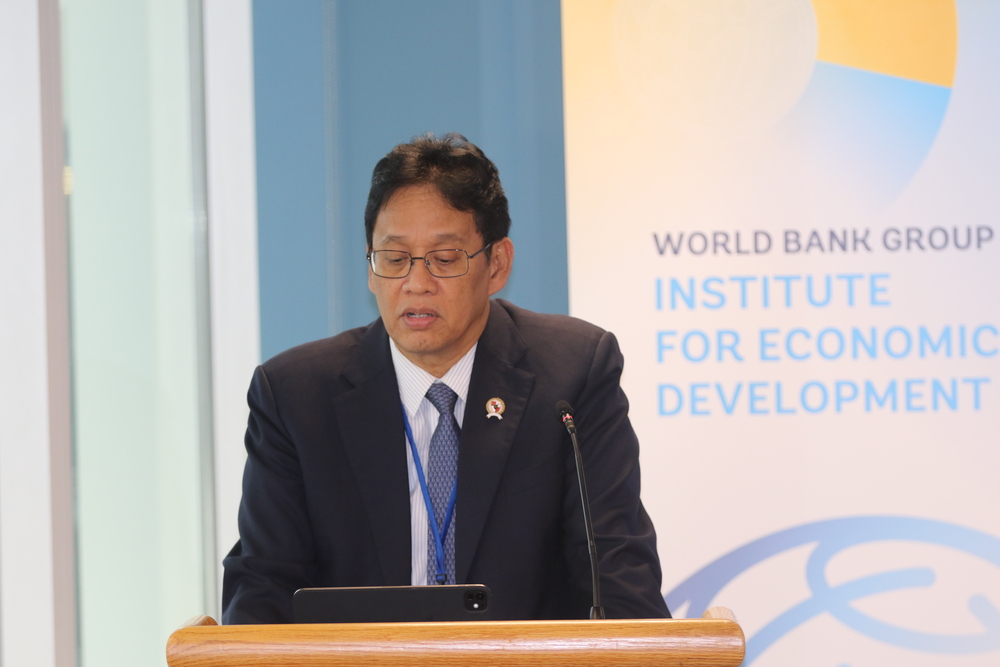
The keynote from H.E. Purbaya Yudhi Sadewa, Minister of Finance of Indonesia, set the tone for the day's discussions with a pointed reminder: escaping the middle-income trap is not an automatic reward for economic stability — it is a deliberate decision made in moments of relative calm.
"The transition to a high-income economy is not an automatic process. It is a choice," the Minister stated. "It requires the courage to reform when things are stable, not only when they are in crisis."
His remarks underscored a theme that would echo throughout the event: that too many middle-income countries wait for economic distress before pursuing the deep structural reforms they need, by which point the political and fiscal space to do so has already narrowed.
The transition to a high-income economy is not an automatic process. It is a choice.
-H.E. Purbaya Yudhi Sadewa, Minister of Finance of Indonesia
Institutions, Not Just Policies
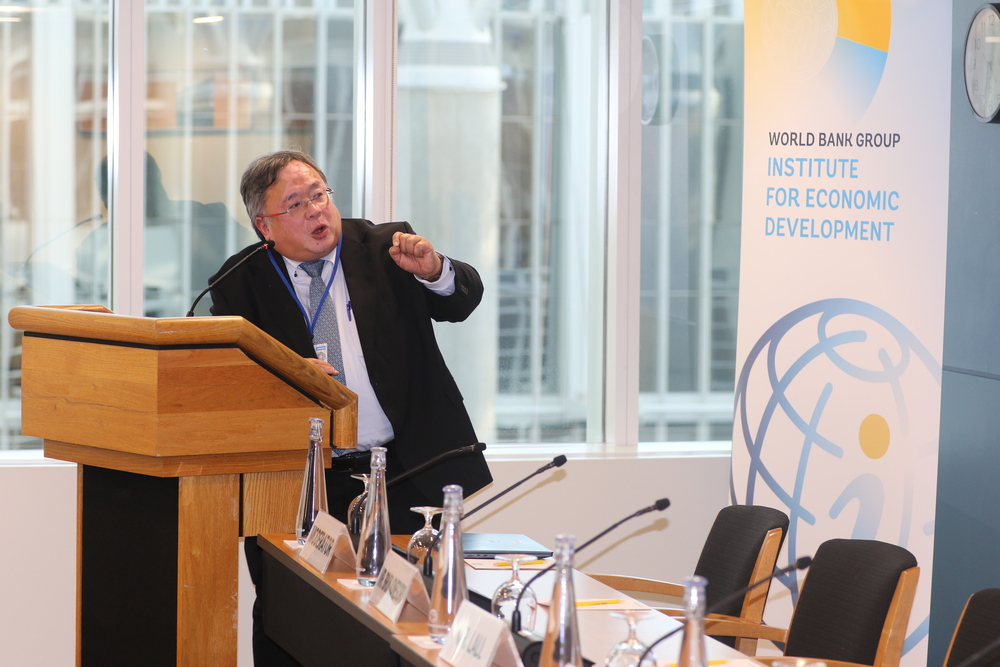
The event's analytical anchor came from a presentation by Bambang Brodjonegoro, Dean and CEO of the Asian Development Bank Institute, who argued that the conventional focus on economic policies misses the most important variable: institutional quality.
"Non-economic factors are as important as economic factors to support growth," Brodjonegoro said. "The issue appears to be primarily an institutional and political economy problem." He pointed to reform gridlock in many Asian countries — a product of fragmented political coalitions, multiple veto players, and weak bureaucratic coherence — as the central obstacle to productivity-driven growth.
Crucially, he cautioned against conflating institutional strength with regime type. "We should not fall into the trap of assuming that having a strong regime will automatically accelerate efforts to avoid the middle-income trap. That is not the right question, and it is not the right logic. The real issue is institutional coherence." The experiences of Japan and Korea, he noted, illustrate the point well: in both countries, strong bureaucratic capacity sustained policy continuity over decades, keeping reform agendas on track regardless of shifts in political leadership.
Looking ahead, Brodjonegoro highlighted Malaysia and Türkiye as countries to watch, both with the potential to graduate to high-income status before 2030, if they can sustain the institutional conditions for reform.
Malaysia's Structural Bet
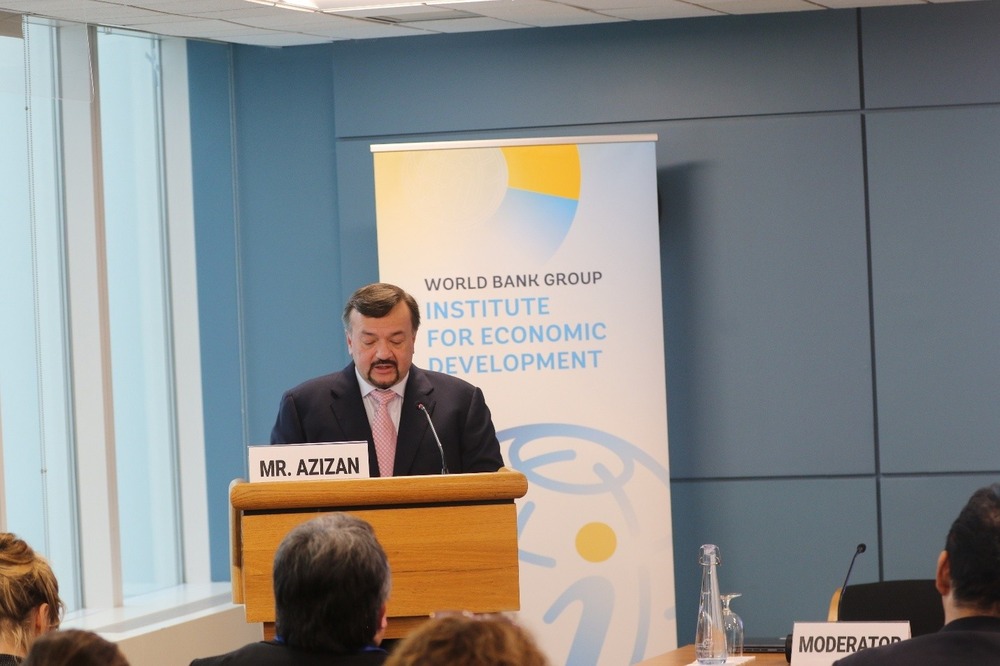
H.E. Amir Hamzah Azizan, Minister of Finance II of Malaysia, offered a candid assessment of what his country is up against — and how it is responding. He was direct about the stakes: trade fragmentation, demographic transitions, and technological disruption are not cyclical headwinds that will pass with time. They are structural forces requiring a fundamentally different policy response.
"Recovery alone is no longer sufficient," the Minister said. "The risks we face are structural."
Malaysia's answer has been to pursue a reform agenda that goes beyond the public sector. "What distinguishes our approach is that it is not solely a government effort. Rather, it is an approach that brings multiple stakeholders together to implement consistent policy reforms and decisively shift the economy toward where it needs to be."
And in Malaysia, the results are beginning to show: labor productivity growth increased from 0.7 percent in 2023 to an estimated 3.4 percent in 2025. But the Minister acknowledged that sustaining this momentum requires a genuine shift; from cost-based competition to innovation-led growth, and deliberate policies to ensure that the most productive firms can enter markets, scale up, and access resources without unnecessary friction.
Three Recalibrations for Middle-Income Policy
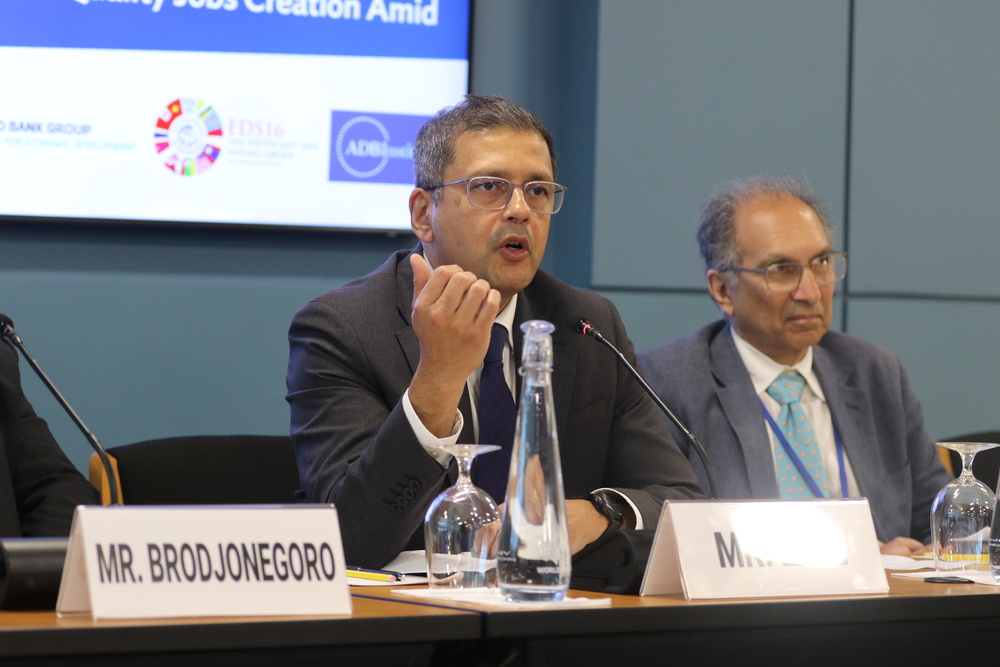
The panel discussion opened with a framework from Somik Lall, Director of Strategy in the Office of the World Bank Group Chief Economist, who posited that middle-income countries need to recalibrate policy across three domains simultaneously. For firms, the focus must shift from size to value and productivity. For talent, from equity of access to ability and smarter allocation of skills. For energy, from the source of energy to its efficiency.
At the heart of the challenge, Lall argued, is a problem of balance: middle-income countries must manage the competing forces of economic creation, preservation, and destruction — and in too many cases, the forces of preservation are winning. Governments over-protect small and unproductive firms while failing to create the conditions for high-value firms to thrive.
"Many middle-income countries do not show healthy 'up or out' dynamics," he noted. "Firms often remain flat and survive without becoming more productive." The prescription: increase market contestability, reduce size-dependent regulations, connect local firms with global innovators, and allow unproductive firms to exit. He also highlighted the need to strengthen equity markets as alternatives to debt finance, which remains the dominant funding mechanism for firms across the South Asia region.
Resilience, Transformation, and the Role of Investment
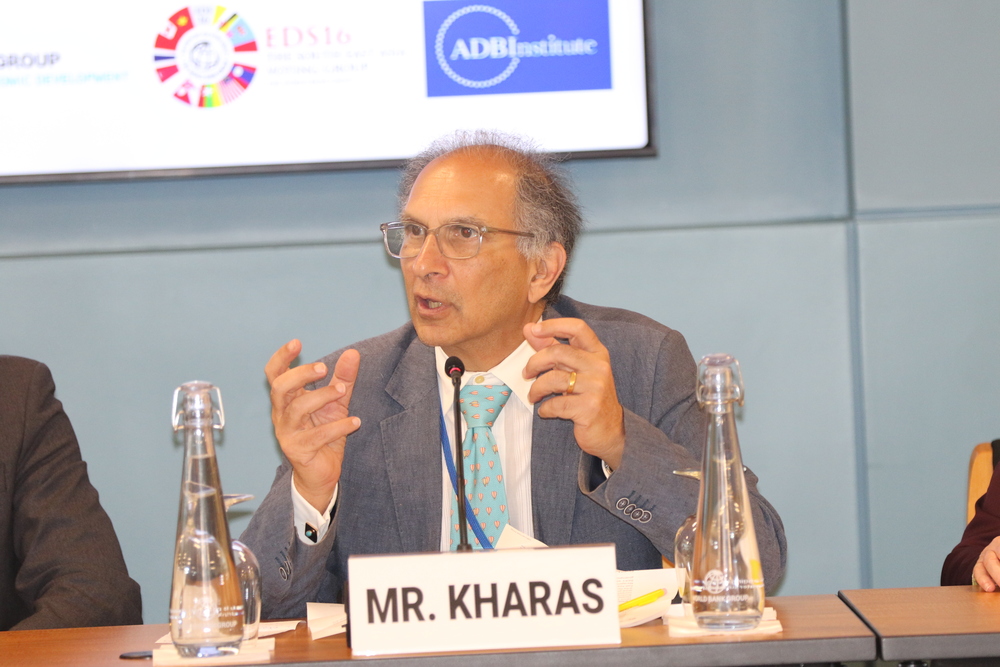
Homi Kharas, Senior Fellow at the Brookings Institution, called for updating the middle-income trap framework itself to incorporate two additional pillars: resilience and transformation. Long-term growth, he argued, requires not just productivity gains but robust safety nets, broader social protection, clean energy transition, and digital transformation.
On the investment side, Kharas was emphatic: growth is ultimately driven by private investment, supported by complementary public spending. In many ASEAN countries, the binding constraint on private investment is not capital — it is talent. Workforce quality and skills gaps remain among the biggest barriers to sustained investment attraction.
He also offered a notably optimistic view of Asia's structural position relative to other regions. "Asia does not face the same degree of underinvestment as Latin America and Africa," he noted, pointing to persistent weaknesses in capital deepening in those regions; where capital per worker has simply not grown fast enough, as a cautionary contrast. For middle-income Asian economies, he projected that future job growth will increasingly come from health, education, and local administration, as these sectors address the structural bottlenecks that constrain broader economic participation.
Competition, Regulation, and the Slowing of Reform
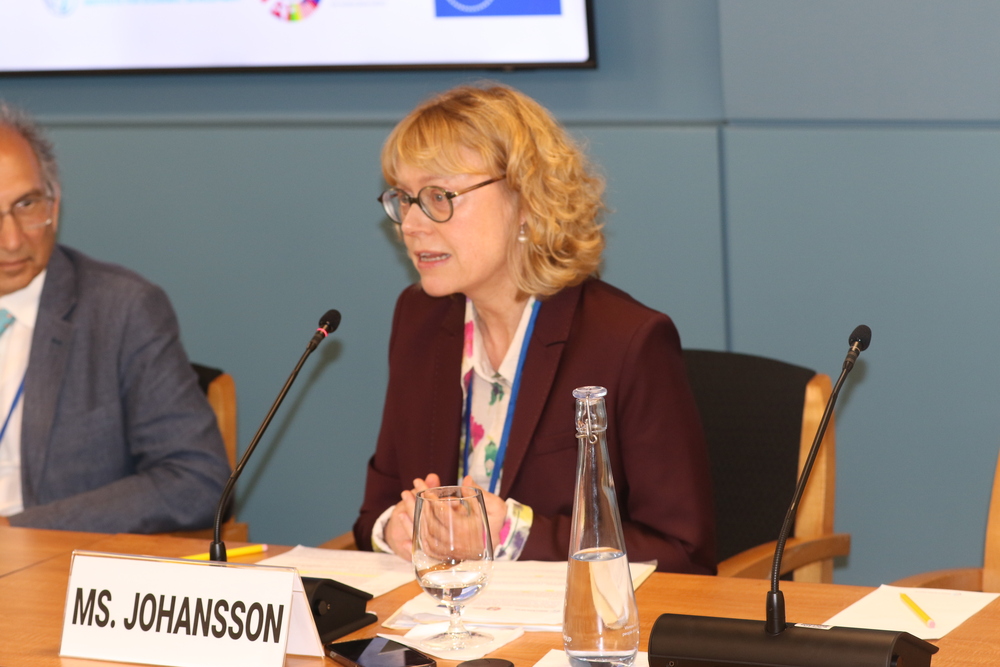
Ása Johansson, Director of Policy Studies in the Economics Department at the OECD, brought comparative evidence on one of the most underappreciated policy levers: product market regulation and competition policy.
"Structural reform is one of the most effective tools for supporting productivity and creating quality jobs," she said. Stronger competition disciplines firms to innovate and allocate resources more efficiently. Yet many middle-income countries still face regulatory barriers that restrict market entry and dampen competitive pressure.
Johansson noted that reform momentum globally was strongest from the mid-1990s to the mid-2000s, but has slowed significantly since. This deceleration, she argued, is itself a risk — because the reform dividend from earlier waves is diminishing, and new structural challenges are emerging faster than policy is adapting.
Structural reform is one of the most effective tools for supporting productivity and creating quality jobs.
-Ása Johansson, Director of Policy Studies in the Economics Department at the OECD
On the inclusion side, she was clear that growth alone does not guarantee shared prosperity. What matters is the policy environment surrounding growth: investment in early childhood education, technical education and upskilling, accessible healthcare, social protection, and stronger domestic revenue mobilization.
And as fiscal pressures mount in many middle-income countries, public spending must become more efficient, and any additional revenues raised must be structured to minimize distortions to growth incentives.
The Hardest Reform: Politics Itself
Bambang Brodjonegoro returned in the panel's second round to address what many economists treat as a boundary condition rather than a policy variable: political economy reform.
"Political economy reform is essential but difficult," he acknowledged. "Governments need to decide whether they are willing to pursue reform seriously." His practical counsel was to start where feasibility is highest — identifying reforms that can move forward without creating major disruption — while building the governance foundations on which more complex reforms can later rest. Good governance and anti-corruption efforts, he argued, are necessary starting points even if they are not sufficient conditions on their own.
The private sector, he emphasized, must be the principal engine of growth. But for that to happen, firms need to compete globally — not just domestically. The experiences of Japan and Korea demonstrate how state support, when combined with exposure to global competition, can accelerate firm-level upgrading.
A Shared Agenda for a Critical Moment
The discussions throughout the day pointed to a coherent set of priorities: build institutions that can sustain reform, strengthen market competition and firm dynamics, invest in people and skills, and ensure that growth translates into quality jobs and shared prosperity. For countries with the resolve to graduate to high-income status, the window of opportunity remains open; but it will not wait indefinitely.
Related Content