Developing countries paid out $741 billion more in principal and interest on their external debt than they received in new financing between 2022 and 2024—the largest gap in at least 50 years. Still, most countries gained some breathing room on their debt last year as interest rates peaked and bond markets opened up again. That enabled many countries to stave off the risk of default by restructuring their debt. In all, developing countries restructured $90 billion in external debt in 2024, more than any time since 2010. Bond investors, meanwhile, pumped in $80 billion more in new financing than they received in principal repayments and interest. This helped several complete multi-billion-dollar bond issuances. However, the funds came at a high price—interest rates hovered around 10%, about double those before 2020.
The International Debt Report 2025 includes an analysis of end-2024 external debt flows and debt stock positions as well as the macroeconomic and debt outlook for 2025 and beyond, and updates on the debt transparency agenda.
Featured Content
Explore our curated insights, events, and learning opportunities on the topic of debt data and statistics.





Key Policy Messages
This section summarizes the high-level policy messages from International Debt Report 2025. Click on each card to read more.
Debt transparency is critical to sustainable public borrowing and accountable lending practices

Debt transparency is critical to sustainable public borrowing and accountable lending practices
Transparent disclosure of public debt facilitates new investment, reduces corruption, increases accountability, and helps prevent costly debt crises. Countries should:
- Regularly publish comprehensive public debt data, including domestic and external debt and guarantees
- Submit data to the World Bank’s Debtor Reporting System (DRS) promptly
- Undertake policy and institutional reforms, for example to widen the scope of public debt reporting to include debt of state-owned enterprises
- Institutionalize debt publications through government orders or decrees
Creditors have a vital role to play in countries’ debt sustainability

Creditors have a vital role to play in countries’ debt sustainability
The most effective way to validate the accuracy of debt data and close data gaps is systematic reconciliation of debtor and creditor records. Creditors should:
- Help increase debt sustainability by disclosing the amounts and terms of lending to low- and middle-income countries
- Contribute to global efforts to harmonize debtor and creditor data, such as the data sharing initiative between G-20 bilateral creditors and the World Bank
- Bear some of the risk of high-interest loans they extend to poor countries by absorbing a portion of the costs if the bet fails
Borrower governments should improve debt management practices

Borrower governments should improve debt management practices
Vulnerabilities associated with elevated debt burdens could be mitigated through prudent debt management in low- and middle-income countries. Governments should:
- Implement legislative and institutional reforms to address debt vulnerabilities
- Improve debt monitoring and recording
- Strengthen reporting on non-guaranteed external borrowing by private sector entities and ensure systems capture debt liabilities associated with foreign direct investment (FDI)
Governments need to strengthen domestic resource mobilization and fiscal sustainability

Governments need to strengthen domestic resource mobilization and fiscal sustainability
Countries should:
- Establish robust fiscal frameworks, strengthen institutional arrangements, and improve domestic governance to rebuild fiscal buffers and improve policy outcomes
- Implement tax reforms, such as broadening tax bases and simplifying tax codes, to increase domestic revenues
- Improve debt data collection practices to lower borrowing costs
- Review debt service and government expenditures in key sectors such as agriculture, education, and health
The international community should support debt relief for the poorest countries facing debt distress

The international community should support debt relief for the poorest countries facing debt distress
For countries at high risk or already in debt distress, the international community should offer financial support by:
- Providing grants and concessional loans
- Leveraging flexible financing options to maintain essential services and ensure resources during crises
- Collaborating at the global and national levels. Debt transparency has improved through the collaborative efforts of debtor governments, creditors, the international community and academia.
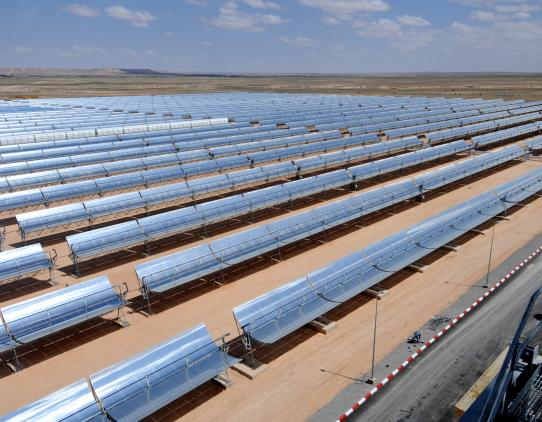
Governments can explore innovative financial instruments to support climate initiatives
Governments can explore innovative financial instruments to support climate initiatives
Governments can explore using financial instruments to pursue climate objectives while also managing their debt burdens and freeing up fiscal space, for example:
- Green and blue bonds raise capital from impact investors to finance projects that have positive environmental benefits
- Debt-for-climate swaps allow a country to replace a portion of its debt with a commitment to invest in development goals, such as renewable energy or climate resilience infrastructure