Governments around the world make thousands of personnel management decisions, procure millions of goods and services, and execute billions of processes each day. They are data rich. And yet there is little systematic practice to date that capitalizes on these data to strengthen government administration. Since governments spend a quarter of global GDP each year to procure goods and services and pay public servants, this means that they are missing out on data insights that could save them billions of dollars.
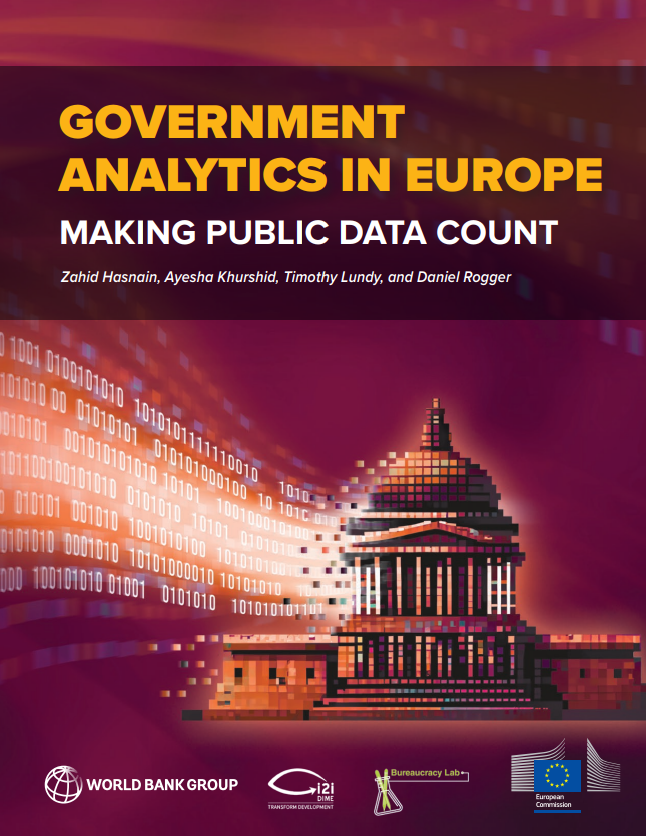
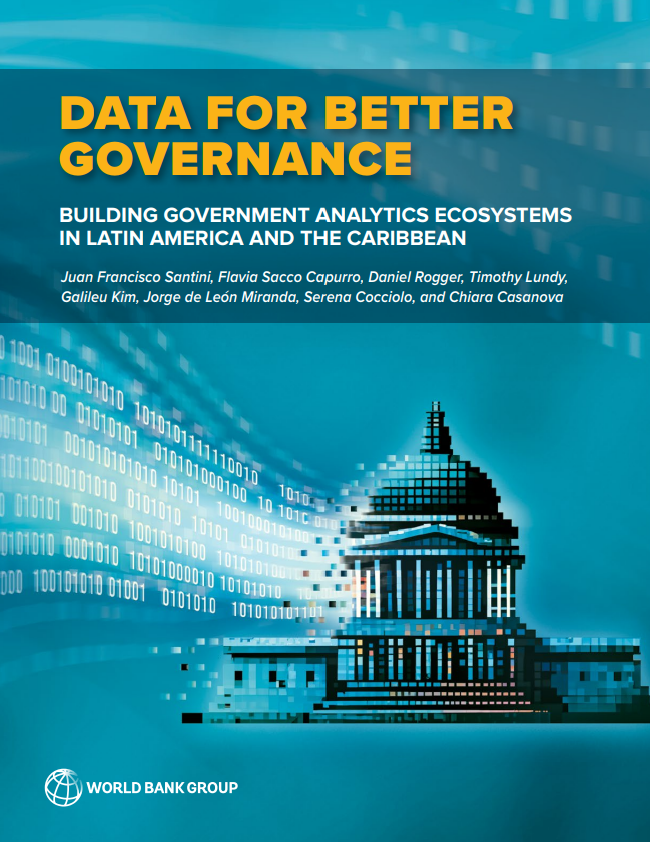
The Government Analytics Handbook seeks to change that by presenting frontier evidence and practitioner insights on how to leverage data to make governments work better. Covering a range of microdata sources—such as administrative data and public servant surveys—as well as tools and resources for undertaking analytics, it aims to transform the ability of governments to take a data-informed approach to diagnose and improve how public organizations work. It also anchors a growing collection of reports and resources examining how public servants throughout the world are using government analytics to transform their administrations. The Government Analytics Collection brings together practical guides, tools, reports, datasets, and methodologies to help policymakers and public officials improve government performance through the effective use of administrative and survey data. Centered around The Government Analytics Handbook, the collection continues to expand with region-specific resources and is designed to make government analytics more accessible and actionable. To broaden its global reach, selected sections of the Handbook have been translated into Spanish with support from the Latin American Center for Development Administration (CLAD) and are being translated into Portuguese by Brazil's National School of Public Administration (ENAP). In addition, the Data for Better Governance report is available in both Spanish and Portuguese, further increasing access to these resources across Spanish- and Portuguese-speaking communities.
This topic page outlines the main messages of The Government Analytics Handbook and the wider Government Analytics Collection.
Featured Content
Explore our curated insights, events, and learning opportunities.


Key Policy Messages
Click on each card to see the main policy recommendations for countries.
Governments already have the data they need to solve the problems they face

Governments already have the data they need to solve the problems they face
While private firms are capitalizing on data analytics and artificial intelligence to improve their internal operations, many governments are falling behind. But governments already collect a wealth of data as part of their day-to-day operations:
- Data from administrative information systems
- Data from surveys of public servants
- Data from household surveys and other external assessments
These data enable a range of approaches to evidence-based problem solving.
Governments can repurpose data to improve administration and achieve better outcomes

Governments can repurpose data to improve administration and achieve better outcomes
Government administration is the process that turns inputs (like the government’s budget and human resources) into outputs and outcomes that impact the lives of citizens. This means that even well-designed and well-funded policies and programs will struggle to achieve their aims unless the organizations, units, and individuals that make up the administration implement them effectively.
Government analytics aims to strengthen government administration—by finding evidence to transform the policies, systems, processes, and cultures within government—so that inputs stretch farther and produce better outcomes.
Government administration is highly diverse, so advanced analytics is too.

Government administration is highly diverse, so advanced analytics is too.
Government administration is a hugely complex environment, and different data sources are better suited to measuring the inputs of administration, its internal processes, and its outputs. Government analytics aims to integrate these different data sources for the fullest picture, and then to use this picture to diagnose problems and predict likely outcomes.
Having access to the big picture can transform public sector management. Real-time dashboards can provide managers with insights into staffing issues, task completion rates, and case productivity, while comparative data can help them benchmark their performance against other organizations or countries. As a result, they can act with both their local context and the full administration in mind.
Governments can enable advanced analytics by investing in infrastructure, capabilities & organizational culture

Governments can enable advanced analytics by investing in infrastructure, capabilities & organizational culture
Government analytics depends upon two key enabling conditions:
- Data infrastructure that provides the raw material for analytics
- Individual skills and organizational incentives that enable public servants to use analytics
By investing in these key ingredients, governments can ensure that individual analytical initiatives reach their full potential. Governments can strengthen their data infrastructure by ensuring it is fully digitalized and developing government-wide policies governing data quality and access. They can strengthen their capabilities by assessing public servants’ skills, hiring analysts, encouraging collaboration with external experts, and creating funding opportunities.
Dedicated analytics units can catalyze the impact of analytics on government administration

Dedicated analytics units can catalyze the impact of analytics on government administration
Governments can advance analytics by creating dedicated analytics units at the center of government and within major organizations. These units centralize expertise and encourage the strategic, consistent production of analytics in alignment with operational needs and the demands of decision-makers.
Centrally located analytics units enable economies of scale and government-wide data architecture and benchmarking. Organization-based units complement them by interpreting and adapting analytics to particular organizational needs. Together, these units allow governments to institutionalize analytical innovation.
Government analytics is meant to empower public servants

Government analytics is meant to empower public servants
Analytics is a tool—it is not meant to make decisions on behalf of public servants, replace their judgment, or supplant other kinds of knowledge. Not everything that matters in government administration can be measured, but measurement can deepen and complement other approaches to problem solving.
If analytics becomes an end in itself, it can produce a distorted picture: data might drift away from the phenomena they were meant to measure, or individuals might be incentivized to manipulate them. To ensure this doesn’t happen, governments should maintain a balanced set of approaches and data sources, balance quantitative data against qualitative data, and uphold ethical principles for data use.