Africa’s Agricultural Moment: Why Food Corridors Are Key to Transforming the Continent
By Agnes Kalibata and Romina Cavatassi
When you do the investment right and bring people with you, you increase the numbers and reduce vulnerability.
— Dr. Agnes Kalibata, PALERMO, AGORA 2025
Africa is standing at a crucial moment. During the Africa Growth and Opportunity: Research in Action (AGORA) conference in Palermo, one message was clear and widely shared among participants: agriculture is the engine that can power Africa’s next economic transformation — but only if the systems around it are strengthened to unlock its full potential.
This is not a new insight, but it has never been more urgent.
Agriculture Still Is the Key Economic Sector in Africa
In every region of the world, nations that first grew their agricultural sectors reduced poverty faster, stabilized food systems, and built the foundation for industrial growth. Evidence presented at AGORA reaffirmed this: agricultural growth reduces poverty more effectively than growth in any other sector, especially in low-income countries.
We have lived this reality.
In Rwanda, targeted investments in seeds, markets, and rural infrastructure—implemented within a single national strategy and budget cycle—contributed to reducing poverty from 60% to 40% in just five years, while stabilizing food prices and lowering vulnerability to shocks. Ethiopia’s agricultural-led industrialization created the basis for diversification and improved food security, supported by sustained public investment in extension, infrastructure, and market liberalization over more than a decade. This is both a numbers game and an opportunity to unlock wealth at the basis of the pyramid, but above all it is unlocking the huge economic potential of most of the population blocked in low income economies. Agriculture played this catalytic role in every country that industrialized successfully. Even without replicating past industrial revolutions in full, strategic agricultural investment can still deliver transformative results.
Yet the Sector Is Still Constrained
Despite progress, Africa’s agriculture is not operating at the scale or speed needed. Farmers still lack reliable access to improved seeds, mechanization, irrigation, and -most critically - markets. Yields remain far below global averages — not because farmers lack skill, but because the systems around them do not deliver.
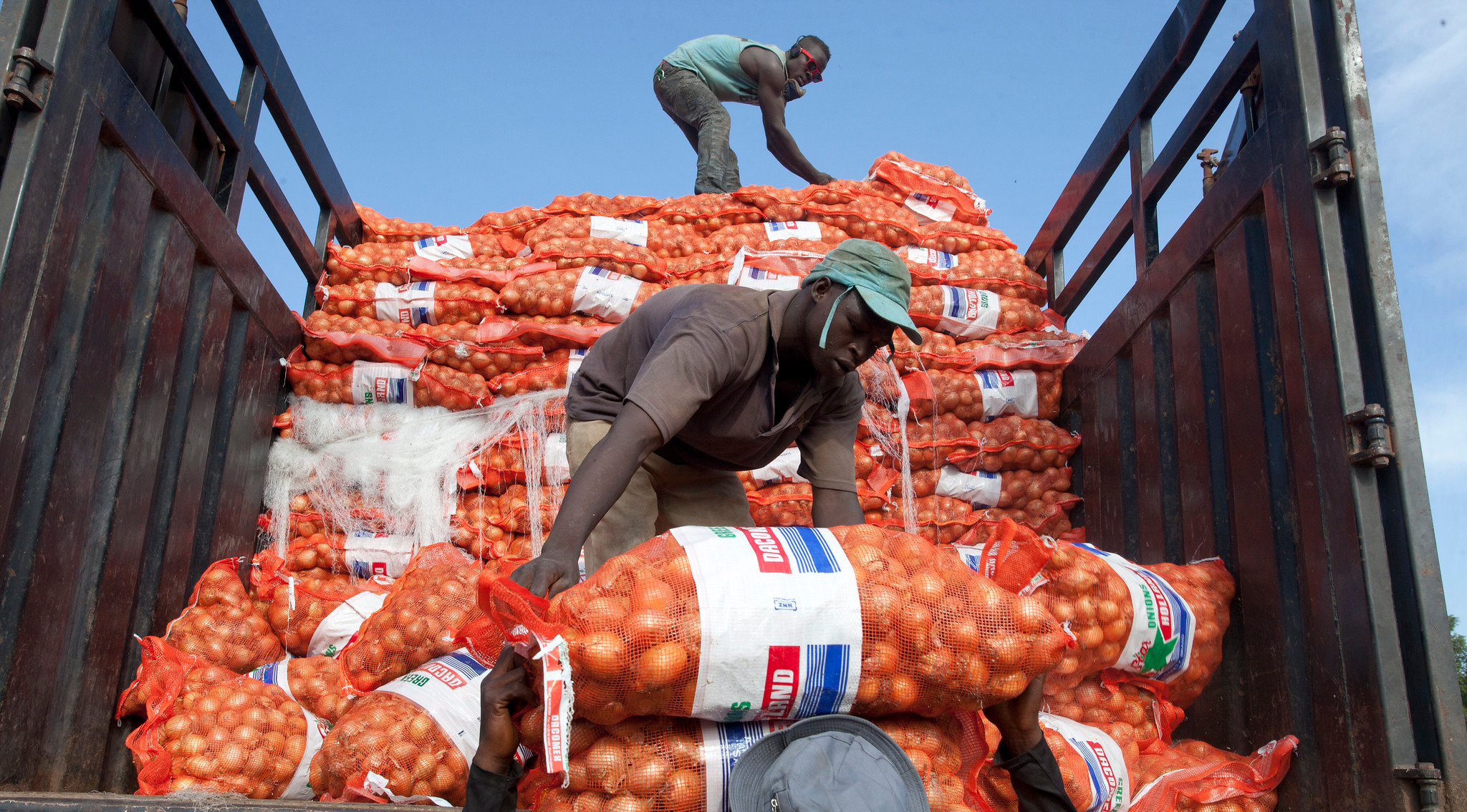
Moving food across African borders can be more expensive than importing it from outside the continent. Trade barriers — sudden export bans, inconsistent standards, border delays and fragmented logistics raise costs and undermine investment. Even where production potential is strong, competitiveness is eroded by weak market integration.
The result is a persistent paradox: Africa imports USD 70–80 billion in food annually, even though it has the natural resources to produce much of this competitively. And yet Africa captures less than 10% of the USD 7 trillion global food and beverage market.
We are struggling to feed ourselves and we are not yet feeding our economies: the global food industry is a seven trillion dollars missed opportunity.
— Dr. Agnes Kalibata, PALERMO, AGORA 2025
Food Corridors: A Practical, System-Level Solution
At AGORA, a powerful concept emerged around the Africa Food Corridors Initiative, which complements the World Bank’s AgriConnect and Italy’s Mattei Plan. Food corridors represent a shift from isolated national interventions to connected regional systems that link production, processing and markets.
Food corridors translate agricultural potential into economic reality by addressing the continent’s most persistent constraints: fragmentation, lack of scale, and weak market access. They organize agriculture around food baskets, geographically defined areas where high-potential agroecology aligns with infrastructure, aggregation, processing capacity, and clear demand, whether domestic, regional, or export-oriented.
By concentrating input systems, extension services, finance, and infrastructure in priority zones, corridors reduce transaction costs and allow productivity gains to be aggregated rather than dissipated across disconnected markets. They can overcome the inherent challenges of small holder agriculture and associated fragmentation and to shift agriculture from individual scattered interventions to systems that can deliver at scale.
Obviously, they are not built in one day nor by one agent alone. They develop step by step starting from governments who trigger the sequencing by de-risking early investments—aligning trade rules, prioritizing infrastructure, and complementing with public goods such as roads, power, standards, and data systems; development finance institutions help bring in private capital by absorbing risk; the private sector follows where demand, logistics, and policy signals are credible. Corridors succeed when roles and rules are clear: governments provide predictability, public finance absorbs first loss and private actors scale what works.
Mapping exercises highlight clear regional clusters with strong comparative advantage, from cereals and livestock in East Africa to cassava and fisheries in West Africa, and major wheat potential in Southern and North Africa. These clusters show that ecological potential exists. The challenge is overcoming traditional barriers to trade, connecting supply and demand, building on efforts of and including small holder farmers, strengthening markets and coming through on agreed regional food trade protocols and frameworks.
The Zambia–DRC Wheat Corridor: A Clear Opportunity
Zambia has some of the highest wheat yields in Africa and vast tracts of available arable land. The Democratic Republic of Congo (DRC), across the border, spends hundreds of millions of dollars a year importing wheat.
With strategic investments along the Lobito Corridor, Zambia could supply much of the DRC’s wheat demand — reducing extra-continental imports, stabilizing prices, and generating jobs in both countries. This is not theoretical. It is a practical and immediate opportunity.
Markets, Policy, and Infrastructure Matter More Than Anything Else
Farmers invest when markets work. When markets fail, even free inputs may not shift behavior.
For food corridors to succeed, governments must ensure predictable trade regimes, harmonized standards, improved rural-to-urban transport, expanded irrigation, accessible energy, and risk-sharing mechanisms that attract private capital. Countries in food corridors must be prepared to strengthen production systems, support farmers and agribusinesses and collaborate with neighbors on infrastructure projects, investments and trade regimes, in other words they must be prepared to leverage the potential of the African Continental Free Trade Area.
Food corridors are doable because they reduce three key risks that have historically deterred private capital: policy, volume and logistics risk. By concentrating production, infrastructure, and market access in priority zones, corridors create the scale and predictability agribusinesses need. For processors, traders, and logistics firms, this means reliable volumes. For financiers, it means cash flows that can be trusted. For SMEs, it means access to markets that value productivity.
Programs such as AgriConnect, M300, and the Mattei Plan can help close the investment gap, especially for agribusiness SMEs, the “unsung heroes” of Africa’s food system who move enormous volumes of food with almost no financial support.
Yet AGORA discussions were realistic and pragmatic about one hard truth: regional food trade fails less because of flawed economics and more because of misaligned incentives. Export bans, ad hoc border closures, and short-term political pressures often override long-term efficiency, even when corridors make economic sense. This is why food corridors are not just technical projects. They are governance projects. Their success depends on sustained regional dialogue, credible dispute-resolution mechanisms, and incentives that reward cooperation rather than fragmentation.
This Is Not About Choosing Between Smallholders and Large Farms
Debate at AGORA questioned whether smallholders or large commercial farms should drive Africa’s agricultural transformation. But this is an old conversation that fails to acknowledge all the advances and lessons learnt to include smallholders as part of viable agriculture systems- from affordable AI driven digital advisory services, to rental mechanization and irrigation services and to vast agro-dealerships that retail input systems and aggregate produce- these systems deliver services to farmers and increase the viability of small holder production systems.
Smallholders manage most of Africa’s Agriculture land and are essential stewards of natural capital - land, soils and water - and rural economies. Large farms bring scale, technology, and efficiency. Africa needs both, integrated into systems where smallholders can participate competitively through aggregation, structured markets, extension, and contractual arrangements, rather than remaining at the margins.
Africa’s Youth Are Ready — Now the Systems Must Follow
Urban food demand will reach USD 400 billion by 2030. Digital adoption is rising rapidly. Climate-smart technologies are spreading.
Young Africans are entering agriculture in new ways: drone spraying, AI advisory tools, cold-chain logistics, food delivery platforms, value-added processing. These pathways were unimaginable a decade ago. Africa’s agrifood system could generate over 200 million jobs across production, processing, logistics, retail, and digital services.
This is not just development. It is economic opportunity on a continental scale.
Africa’s Agricultural Moment Has Arrived
AGORA showed that Africa is ready for a new agricultural ambition, grounded in systems thinking, regional integration, policy predictability, investment at scale and a strong bet on the continent’s youthful population. Food corridors offer a blueprint for reducing import dependence, strengthening regional markets, and positioning Africa as a major player in global food systems.
The vision is bold, but the components are already in place.
What Africa needs now is commitment, coordination, and investment proportional to the moment. Africa’s agricultural moment has come and there are choices to make- let’s make it count!