May 28, 2026
 Rome, Italy - Villa Mondragone
Conference in Development and Climate Economics
The accelerating climate crisis poses complex and uneven challenges for societies across the globe. Understanding how climate change interacts with economic development, institutional capacity, technological progress, and social well-being is now one of the most urgent and intellectually demanding tasks for researchers and policymakers alike.
The Conference in Development and Climate Economics, organized by SITES, AICC, and the Fondazione Tor Vergata of the University of Rome Tor Vergata, brought together leading scholars, practitioners, and international institutions to advance frontier knowledge on the intertwined agendas of development and climate change mitigation and adaptation.
The Institute for Economic Development was pleased to take part in this year’s conference with a session on Leveraging Multi-Level Data to Measure Climate Risks and Adaptation.
This session highlighted how combining different types of data—from satellite and climate information to household surveys and people’s own perceptions—can improve how we understand climate risks and adaptation. Speakers from FAO, FEEM/OpenMod4Africa, the University of Padova, and the World Bank Group, explored how an integrated approach can improve climate risk measurement, capture adaptation more effectively, and support scalable, policy-relevant decision-making in data-scarce contexts.
| May 28, 2026 |
Introduction and Moderation Romina Cavatassi, Program manager, WBG Institute For Economic Development |
Measuring Climate Risk through Geospatial and Remote Sensing Data Hideki Kanamaru, FAO Advances in using satellite imagery, remote sensing, and climate data to measure exposure to droughts, floods, heat, and environmental degradation.
|
Open-Source Geospatial Tools for Energy and Climate Planning: Lessons from OpenMod4Africa Giulia Vaglietti, Fondazione Eni Enrico Mattei (FEEM) / OpenMod4Africa Open-source energy system models and geospatial tools are increasingly central to understanding the intersection of climate, energy access, and development in data-scarce contexts.
|
Using Mental Model Interviews to Understand Adaptation-Related Beliefs and Behaviors and to Improve Quantitative Survey Questions Pamela Giustinelli, Universita’ di Padova
|
The LSMS Perspective: Integrating Household Surveys, Weather Station Data, and Remote Sensing Data to Measure Climate-Related Socioeconomic Impacts Adriana Paolantonio, World Bank Group
|
| Moderated Discussion and Q&A |
 | Romina Cavatassi is Program Manager at the World Bank Group’s Institute for Economic Development, where she leads work on agrifood systems, climate adaptation, and sustainable development. She has over 20 years of experience across the World Bank, IFAD, and FAO, bridging research, policy, and operations. Romina holds a PhD in Natural Resource Economics from Wageningen University (The Netherlands), an MSc in Environmental Assessment and Evaluation from the London School of Economics (UK), and a Master’s degree in Economics from the University of Bologna (Italy). |
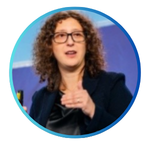 | Pamela Giustinelli is Associate Professor of Economics at the University of Padova and Associate Editor of the Economic Journal. Her research focuses on subjective expectations, uncertainty, and measurement, with applications to education, labor, health, climate change, and firm behavior. Prof. Pamela Giustinelli holds a Bachelor in Business Economics from the University of Verona, a Master's in Economics from Bocconi University, and a PhD in Economics from Northwestern University. |
 | Hideki Kanamaru is a Climate Change Officer at the FAO Office of Climate Change, Biodiversity and Environment. He leads a team working on climate services, generating evidence on climate risks in agriculture to inform adaptation investments and policy decisions, and advancing the use of weather and early warning information to help farmers manage climate and weather-related risks. |
 | Adriana Paolantonio is an Economist with the World Bank’s Living Standards Measurement Study (LSMS), where she works on agriculture, rural development, climate adaptation, and survey methods. Previously, she worked at IFAD and FAO on impact evaluation and climate-smart agriculture. She holds a Ph.D. in Economics from the University of Rome Tor Vergata and a master’s degree in Cooperation and Development from the University of Pavia. |
 | Giulia Vaglietti is a researcher at FEEM specializing in environmental and energy economics, with a focus on climate and resource management. She leads the capacity-building work package of OpenMod4Africa, supporting African energy planning through open-source tools, data, and local expertise. Since her Master's degree in Environmental and Food Economics from the University of Milan, she has specialized in environmental and energy economics, with a strong emphasis on climate change. She is focusing on an open energy system modelling toolbox specifically adapted to African needs. This toolbox, called the OM4A Toolbox, will provide models and datasets that allow African energy experts and decision-makers to conduct in-depth analyses on how to achieve a low-carbon, reliable, and competitive energy supply. |